


You may also like
-

Exposition Bauhaus à Weimar Poster
Dörte Helm · 1923 · poster Bauhaus aux formes géométriques fortes et lettrage rouge sur fond beige
Poster dès €9 · Encadré dès €16
-

Bauhaus 14 Poster
MORYARTY · 1923 · Poster Bauhaus géométrique avec blocs de couleurs primaires et typographie moderniste nette
Poster dès €9 · Encadré dès €16
-

Bauhaus géométrique 1923 Poster
MORYARTY · 1923 · Poster Bauhaus géométrique avec formes superposées et contrastes colorés modernistes audacieux
Poster dès €9 · Encadré dès €16
-

Bauhaus 4 Poster
MORYARTY · 1923 · Poster géométrique Bauhaus aux formes orange et noir sur fond beige chaud
Poster dès €9 · Encadré dès €16


-

'Très beaux posters. La qualité est incroyable et nous les avons reçus très vite !'
-

'Une boutique incontournable. Un choix énorme de posters. On y a passé plus d'une heure !'
-

'Parfait pour trouver un cadeau. Les prix sont très corrects. Et ils peuvent l'encadrer et l'emballer sur place'
À propos de l'artiste
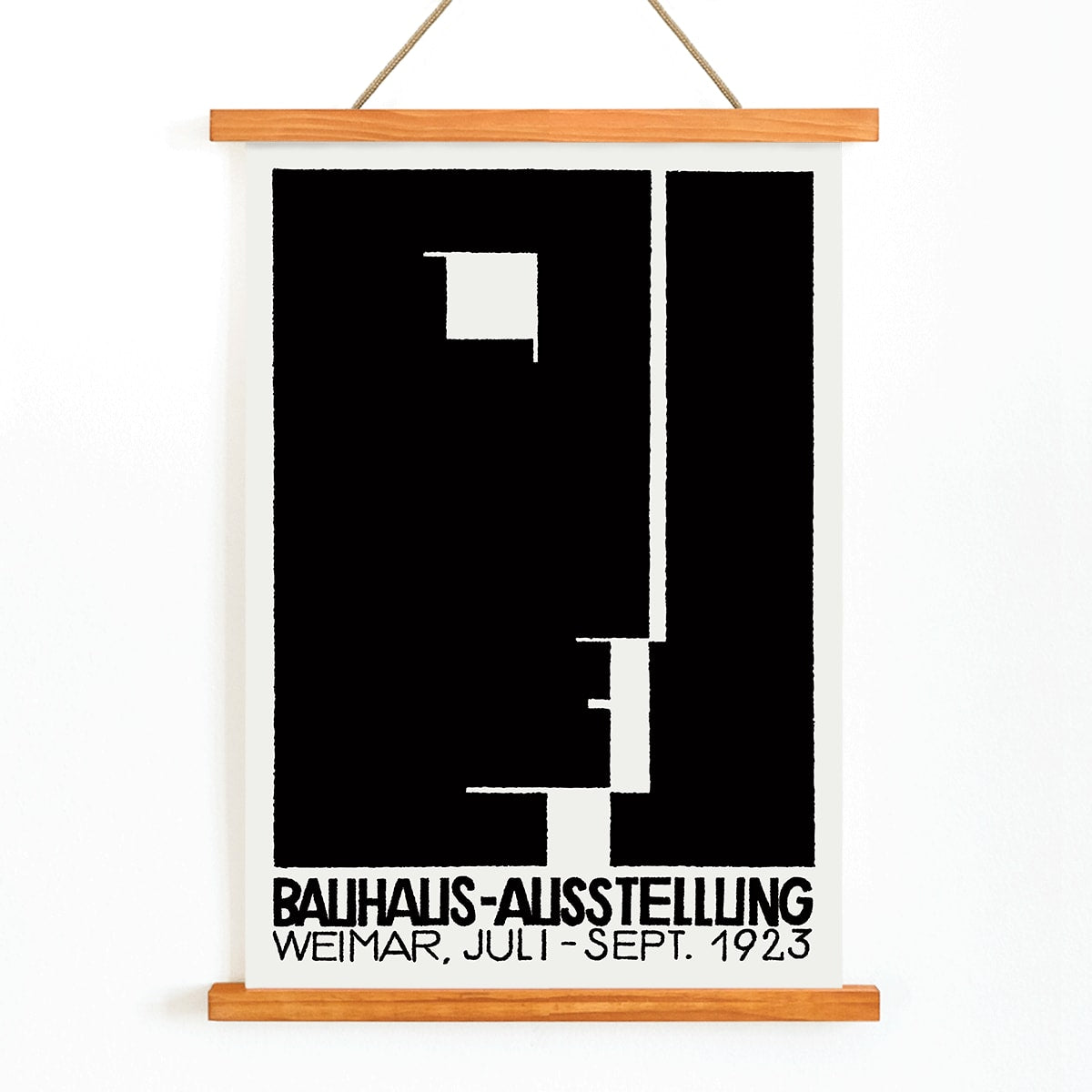
Par un artiste inconnu, ce poster d'exposition de 1923 prend naissance au cœur de l'école du Bauhaus à Weimar. À la différence des signatures individuelles, l'esprit du Bauhaus valorisait une démarche collective où l'esthétique et la fonction se conjuguent. Les concepteurs privilégiaient la clarté, l'utilité et l'intégration de l'art, de l'artisanat et de la technologie pour imaginer un langage visuel nouveau
Ce principe de coopération et d'innovation a façonné le mouvement, qui visait à abolir les barrières entre disciplines et à proposer une approche universelle de la communication visuelle. Pour voir d'autres exemples de ce courant décisif, explorez notre collection de posters Bauhaus
L'œuvre
Ce poster annonce la Bauhaus Ausstellung de 1923, première grande exposition publique de l'école. L'événement constitue une étape majeure de l'histoire du design en affirmant que l'architecture, le mobilier et les arts graphiques peuvent s'unifier sous une même vision. L'exposition cherchait à démontrer que le design moderne répondait à la fois à des besoins pratiques et à des idéaux sociaux, illustrant l'engagement du Bauhaus en faveur du progrès et de la collaboration interdisciplinaire
Inscrite dans le contexte de la République de Weimar, l'affiche traduit l'optimisme et l'énergie expérimentale de l'époque, invitant le public à découvrir de nouvelles formes de créativité industrielle
Style et caractéristiques
Le poster adopte une palette noire et blanche frappante, privilégiant des formes géométriques audacieuses et une typographie sans empattement d'une grande précision. La composition joue sur les contrastes marqués, des lignes nettes et une mise en page asymétrique dynamique qui suggère mouvement et équilibre. L'utilisation de l'espace négatif et des alignements calculés reflète la préférence du Bauhaus pour un ordre construit plutôt que pour l'ornement
Le ton général est volontaire et résolument moderne, en résonance avec les esthétiques du constructivisme et du modernisme naissant. Pour d'autres œuvres graphiques dans cet esprit, parcourez nos sélections impressions noir et blanc et art abstrait
Dans la décoration intérieure
Ce poster moderniste apporte structure et lisibilité à des espaces comme un bureau, un atelier ou un salon minimaliste. Ses formes géométriques et sa palette monochrome en font un choix polyvalent pour constituer des murs de galerie ou pour se suffire à lui-même en tant que pièce maîtresse
Associez-le à des murs blancs ou neutres, des accents métalliques ou du bois naturel pour un rendu Bauhaus classique. Un cadre noir fin de notre collection de cadres renforcera son caractère architectural