


You may also like
-
Asa-dsuma-bune Poster
Kazumasa Ogawa · 1896 · Impression colorisée à la main de fleurs écarlates et de feuilles nettes sur fond discret
Poster dès €9 · Encadré dès €16
Prix habituel À partir de €6,00Prix habituel -
Branche de roses sauvages Poster
Antoinette Apolonia Luden · 1890 · Gracieuse impression de rose sauvage avec fleurs aérées, boutons et tiges vertes
Poster dès €9 · Encadré dès €16
Prix habituel À partir de €6,00Prix habituel -
Bouquet de fleurs Poster
Herman Henstenburgh · 1700 · Riche impression d'art floral avec fleurs superposées, feuilles enroulées et reflets joailliers
Poster dès €9 · Encadré dès €16
Prix habituel À partir de €6,00Prix habituel -
Œillets Poster
Georg Dionysius Ehret · 1730 · Élégante impression botanique d'œillet aux pétales froncés et tiges fines sur fond crème
Poster dès €9 · Encadré dès €16
Prix habituel À partir de €6,00Prix habituel


-

"Very nice Posters. The quality is amazing and we received it very quickly !"
-

"A shop to visit absolutely. Huge selection of posters. We spent more than an hour there !"
-

"Perfect to find gift. Price are very good. An they can frame and pack it on site"
À propos de l'artiste
Willem Hekking Jr. était un aquarelliste botanique du XIXe siècle célébré pour ses études méticuleuses de plantes cultivées. Inscrit dans la tradition européenne du florilège, il élevait les fleurs au rang d'objets d'intérêt scientifique et artistique, alliant observation attentive et technique raffinée.
Ses œuvres séduisent les collectionneurs sensibles à l'art botanique vintage et ancré dans l'histoire. Pour d'autres exemples de cette tradition, explorez notre impressions botaniques et découvrez des pièces associées dans notre sélection d'art classique.
L'œuvre
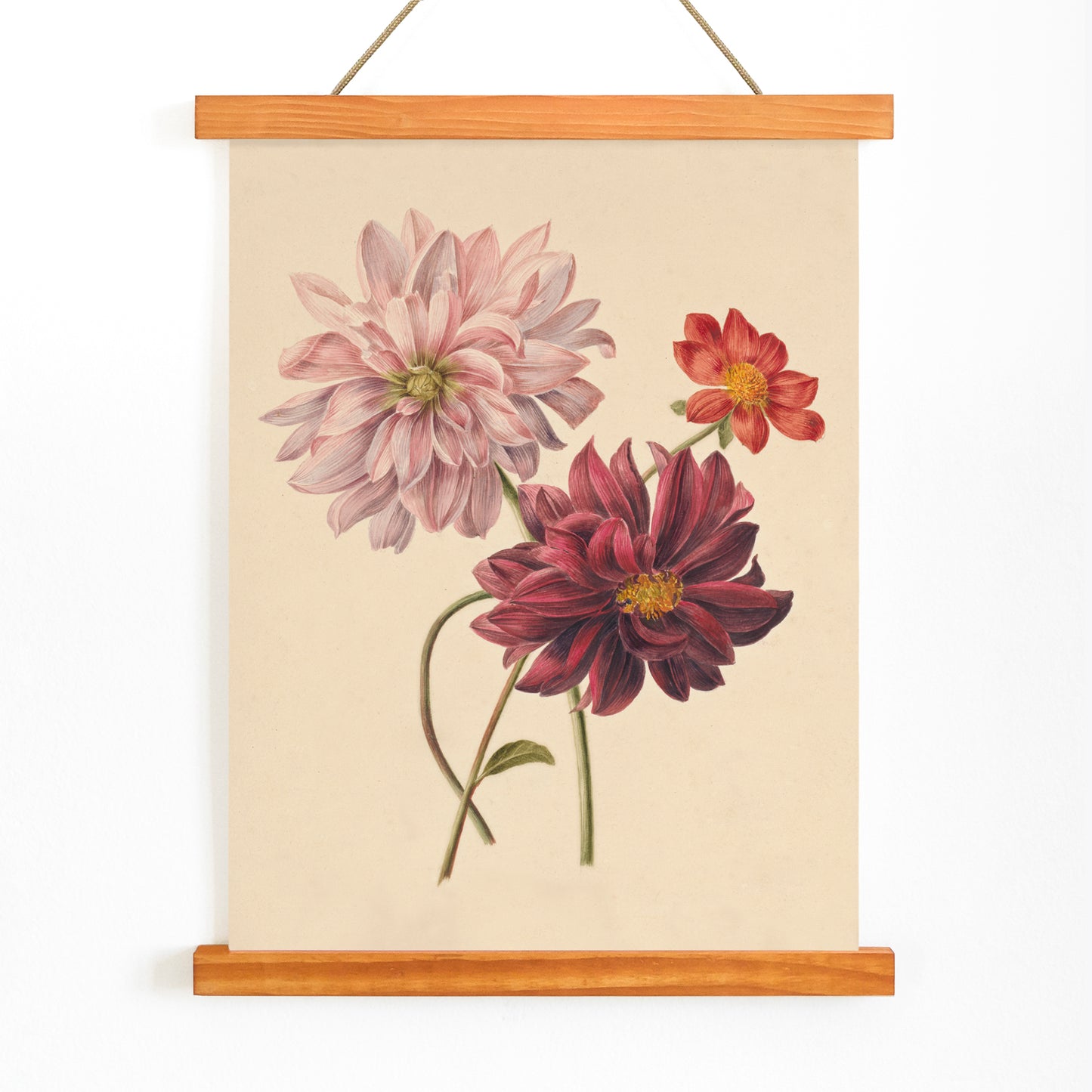
Au début du XIXe siècle, les dahlias étaient devenus un phénomène horticole en Europe après leur introduction depuis le Mexique. Cette illustration de 1838 reflète la fascination de l'époque pour le catalogue et la célébration des nouvelles variétés, servant à la fois d'enregistrement scientifique et d'objet décoratif. Ces planches étaient essentielles pour diffuser le savoir botanique avant l'avènement de la photographie en couleur et ornaient souvent les intérieurs des amateurs de plantes et des collectionneurs.
Cette estampe incarne l'esprit de l'exploration botanique du XIXe siècle, saisissant l'attrait du dahlia comme trésor de jardin et symbole de beauté cultivée.
Style et caractéristiques
La composition présente un dahlia détaillé avec un feuillage vert d'accompagnement, posé sur un fond beige neutre qui met en valeur la silhouette de la plante. La technique aquarelle crée des transitions douces sur les pétales, des couches de rose et de rouge apportant profondeur et délicatesse.
Des verts naturalistes et des tons beige chaleureux dominent la palette, conférant à l'impression une atmosphère calme et élégante. La mise en page épurée invite à l'observation rapprochée et constitue un exemple classique d'illustration botanique. Pour des palettes similaires, voyez notre décoration murale rose et décoration murale beige.
Dans la décoration intérieure
Cette impression botanique de dahlia apporte une touche sereine et cultivée aux chambres, couloirs ou coins lecture. Son élégance discrète s'accorde tant avec des intérieurs traditionnels que minimalistes, offrant un point focal naturel sans surcharger l'espace.
Associez l'œuvre à des textiles en lin, des bois chaleureux et des accents aux tons poudrés comme le rose fané ou le rouge profond. Elle trouve également sa place dans les petits espaces de repas ou au sein d'un mur de galerie soigné, particulièrement harmonieuse avec l'une de nos cadres.