


You may also like
-
Tabu Poster
Julius Klinger · 1919 · Poster Tabu audacieux, conçu comme une affiche verticale au graphisme saisissant
Poster dès €9 · Encadré dès €16
Prix habituel À partir de €6,00Prix habituel -
Lustige Blatter Badenummer Poster
Julius Klinger · 1911 · poster au maillot rayé, feuillage Art Nouveau et lettrage balnéaire
Poster dès €9 · Encadré dès €16
Prix habituel À partir de €6,00Prix habituel -
Hollerbaum und Schmidt Poster
Julius Klinger · 1910 · poster publicitaire spiralé avec petite figure en costume et larges bandes rouges et bleues
Poster dès €9 · Encadré dès €16
Prix habituel À partir de €6,00Prix habituel -
Costüm-Verleih Germania Poster
Julius Klinger · 1909 · poster de location de costumes aux cercles abstraits et lettrage berlinois
Poster dès €9 · Encadré dès €16
Prix habituel À partir de €6,00Prix habituel


-

"Very nice Posters. The quality is amazing and we received it very quickly !"
-

"A shop to visit absolutely. Huge selection of posters. We spent more than an hour there !"
-

"Perfect to find gift. Price are very good. An they can frame and pack it on site"
À propos de l'artiste
Julius Klinger était un graphiste et illustrateur autrichien dont le travail a marqué le mouvement moderne de l'affiche au début du XXe siècle. Actif à Vienne et à Berlin, il a su fusionner publicité et impression d'art avec une sensibilité visuelle qui allie clarté conceptuelle et sophistication formelle.
La carrière de Klinger s'est développée pendant une période d'intense échange artistique entre l'Europe et le Japon, lorsque le japonisme a inspiré de nombreux créateurs occidentaux. Son œuvre témoigne d'un intérêt pour la structure, la lisibilité et le potentiel décoratif des sujets quotidiens, ce qui a permis à ses affiches de devenir des icônes durables de la culture visuelle moderne.
L'œuvre
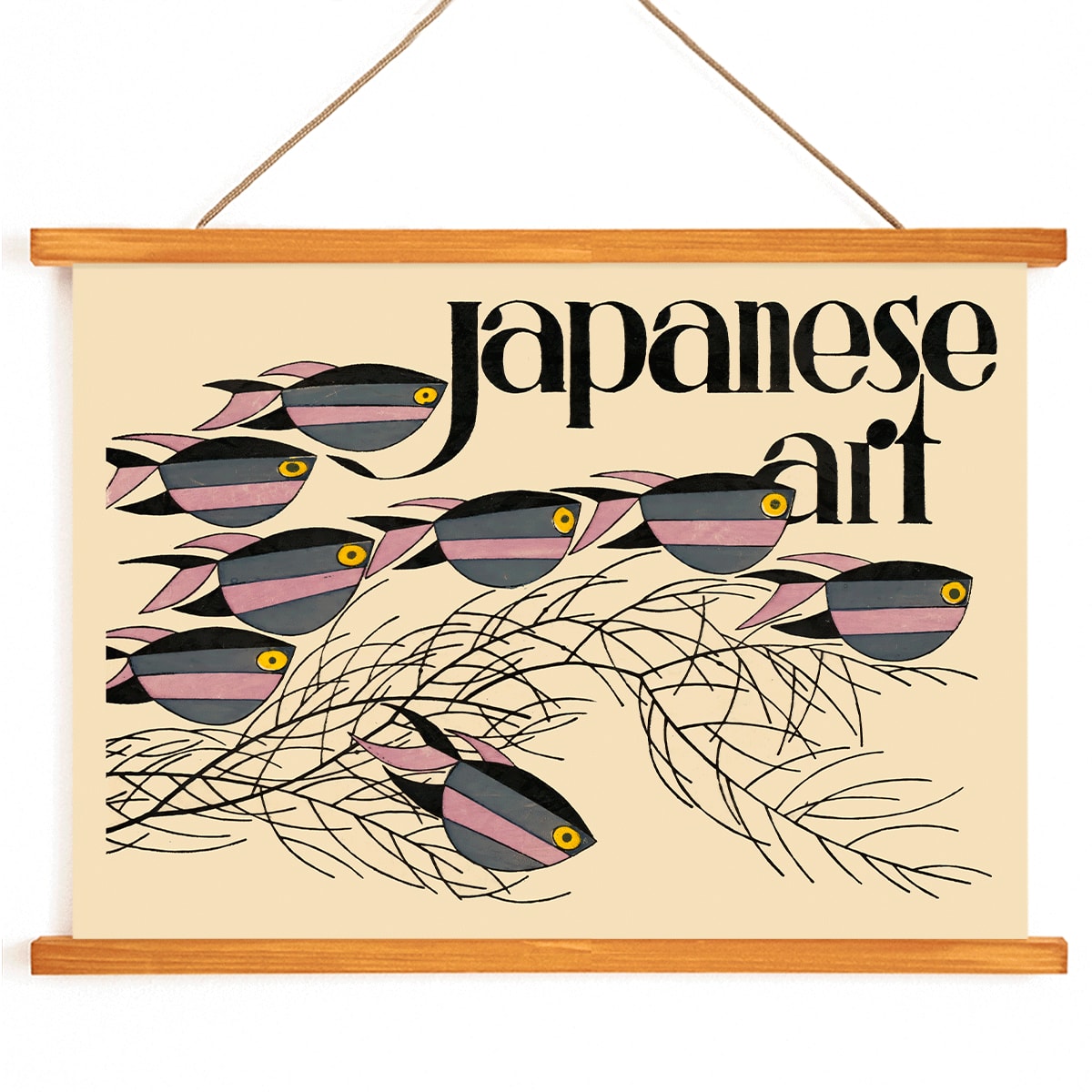
Créé en 1927, ce poster s'inscrit dans une époque où les artistes européens réinterprétaient volontiers les motifs et les principes esthétiques japonais. L'œuvre traduit une observation calme et méditative, souvent associée à l'art japonais, et semble destinée à insuffler une atmosphère de sérénité et de goût raffiné aux espaces intérieurs. Les poissons et les algues sont rendus avec une économie de moyens qui privilégie l'équilibre et la composition.
Style et caractéristiques
La composition présente un agencement gracieux de poissons et d'algues fluides, dessiné avec un travail de ligne noire précis rappelant les estampes japonaises. L'utilisation maîtrisée de l'espace négatif laisse respirer les formes et confère à l'image une qualité aérée et contemplative. La palette limitée se compose principalement de noir, beige et gris, relevée de touches subtiles de jaune et de rose qui animent la scène sans rompre sa quiétude. L'effet général est harmonieux et élégant, séduisant les amateurs d'art marin ainsi que ceux attirés par l'esthétique japonaise et les impressions animalières raffinées.
Dans la décoration intérieure
Ce poster vintage de poissons s'intègre idéalement dans des espaces sereins comme chambres, salles de bains ou coins lecture, où sa présence calme peut se révéler pleinement. Sa palette discrète s'accorde avec des matériaux naturels tels que lin, chêne ou pierre, et ses accents de couleur peuvent être repris dans les accessoires décoratifs. L'œuvre trouve aussi sa place dans une composition murale mêlant impressions animalières et art de mer minimaliste, apportant une note de culture et d'élégance contemporaine.