


You may also like
-
Poisson-globe Poster
Mark Catesby · 1754 · Élégante impression de poisson-globe aux traits fins et tons verts naturels
Poster dès €9 · Encadré dès €16
Prix habituel À partir de €6,00Prix habituel -
Asiminier (pawpaw) Poster
Mark Catesby · 1754 · Élégante impression botanique de pawpaw avec larges feuilles vertes et fruits mûrissants
Poster dès €9 · Encadré dès €16
Prix habituel À partir de €6,00Prix habituel -
Lézard à queue bleue Poster
Mark Catesby · 1754 · Vivante impression d'histoire naturelle d'un lézard à queue d'un bleu vif et posture alerte
Poster dès €9 · Encadré dès €16
Prix habituel À partir de €6,00Prix habituel -
Iguane Guana Poster
Mark Catesby · 1754 · Élégante impression d'iguane posée sur une branche au rendu scientifique précis
Poster dès €9 · Encadré dès €16
Prix habituel À partir de €6,00Prix habituel


-

'Très beaux posters. La qualité est incroyable et nous les avons reçus très vite !'
-

'Une boutique incontournable. Un choix énorme de posters. On y a passé plus d'une heure !'
-

'Parfait pour trouver un cadeau. Les prix sont très corrects. Et ils peuvent l'encadrer et l'emballer sur place'
À propos de l'artiste
Mark Catesby était un naturaliste et illustrateur anglais dont l'œuvre, à l'aube du XVIIIe siècle, a fait découvrir aux Européens la flore et la faune de l'Atlantique. Ses voyages en Amérique du Nord et aux Caraïbes ont donné lieu à des études minutieuses mêlant rigueur scientifique et sens aigu du dessin, faisant de ses publications des références incontournables pour les naturalistes de l'époque.
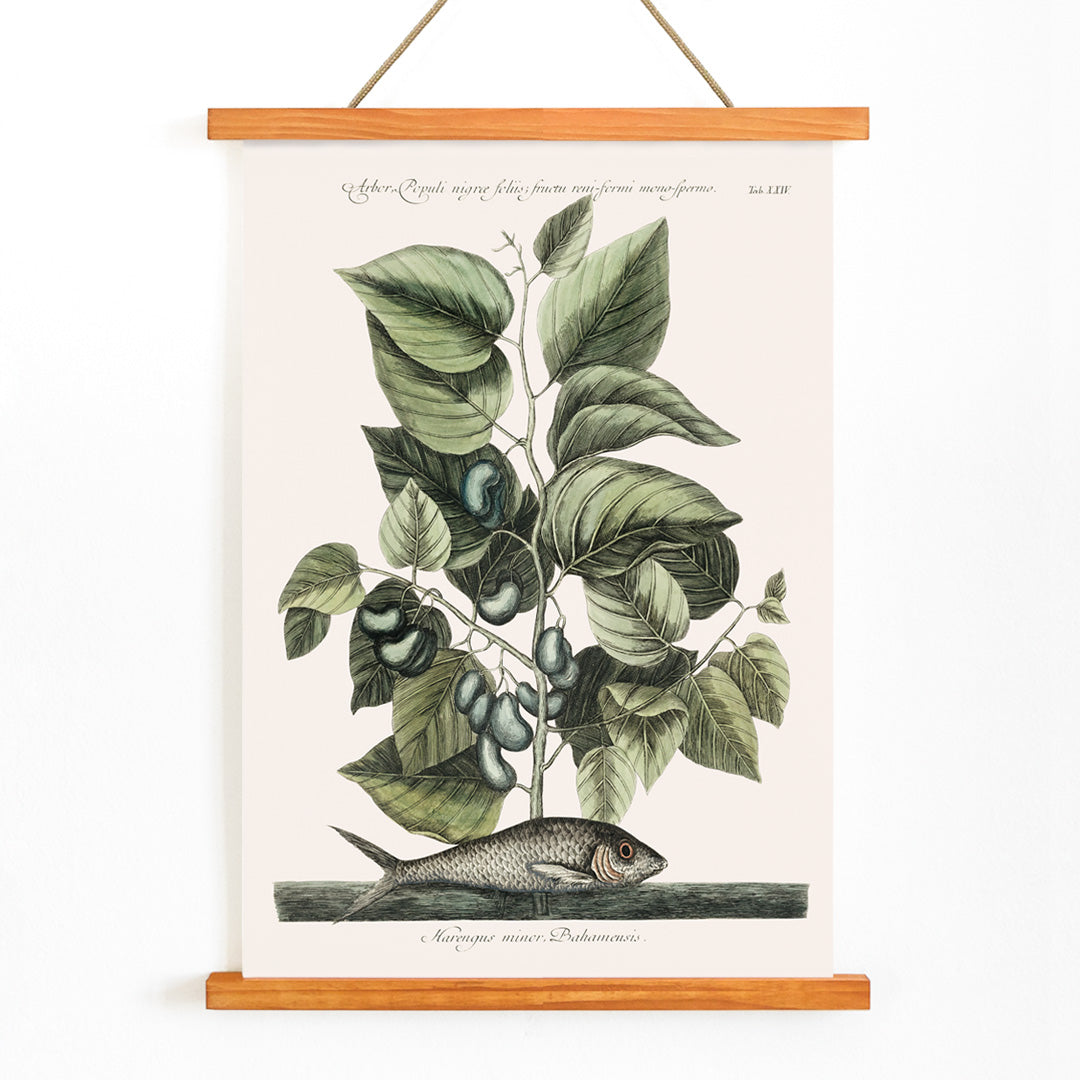
Cette planche de sardine, publiée en 1754, incarne l'esprit des Lumières porté sur la classification et la mise en ordre du monde naturel. Les estampes de Catesby visaient à informer collectionneurs, savants et amateurs, tout en offrant des images d'une grande qualité esthétique
L'œuvre
Chez Catesby, chaque espèce mérite une documentation soignée, et la modeste sardine se voit traitée avec le même sérieux scientifique que des sujets plus exotiques. Destinée aux volumes d'histoire naturelle qui circulaient dans les bibliothèques et cabinets de curiosités, cette planche répondait à la fois à un objectif éducatif et décoratif.
Ces images ont participé au mouvement du XVIIIe siècle en faveur du partage des connaissances et de la mise en catalogue de la biodiversité, invitant le regard à saisir l'interdépendance des êtres marins. Aujourd'hui, l'œuvre parle aux amateurs dart mural de la mer et de l'océan et aux passionnés de l'illustration naturaliste ancienne.
Style et caractéristiques
La planche montre une sardine en profil, dessinée avec une grande précision; des éléments botaniques délicats suggèrent son habitat côtier. Des traits fins dessinent les écailles, les nageoires et la tête, tandis qu'un ombrage discret crée une légère profondeur sans emphase picturale.
La palette reste sobre : blancs argentés et verts tendres sur un fond de papier patiné. L'ensemble dégage une atmosphère posée et contemplative, reflet de la clarté et de l'autorité tranquille des planches scientifiques anciennes
Dans la décoration intérieure
Cette impression vintage diffuse un charme côtier discret et s'impose comme un choix raffiné pour cuisines, salles à manger, couloirs ou bureaux. Ses tonalités douces se marient aux bois naturels, au lin et à la céramique, et s'accordent aussi bien avec un intérieur classique qu'avec un style traditionnel contemporain.
Pour une mise en scène cohérente, reprenez les verts en touches sauge ou en plantes d'intérieur, et laissez les reflets argentés éclairer un mur de galerie. L'œuvre se combine harmonieusement avec des sélections issues de impressions scientifiques ou de posters d'animaux pour composer une narration thématique