


You may also like
-
Tigre talismanique Poster
Artiste inconnu · 1950 · Poster tigre talismanique avec fortes rayures d'encre et regard alerte sur beige chaud
Poster dès €9 · Encadré dès €16
Prix habituel À partir de €6,00Prix habituel -
Le Tigre de Ryokoku Poster
Utagawa Hirokage · 1860 · Impression d'art ukiyo-e dramatique d'un tigre saisissant un coq sous une calligraphie puissante
Poster dès €9 · Encadré dès €16
Prix habituel À partir de €6,00Prix habituel -
Saitō no Oniwakamaru Poster
Tsukioka Yoshitoshi · 1872 · Poster ukiyo-e dramatique d'un guerrier affrontant une carpe géante parmi des vagues
Poster dès €9 · Encadré dès €16
Prix habituel À partir de €6,00Prix habituel -
L'acteur Kawarazaki Gonjurō Poster
Utagawa Kunisada II · 1864 · Impression d'art kabuki dramatique avec motifs de costume audacieux et regard intense
Poster dès €9 · Encadré dès €16
Prix habituel À partir de €6,00Prix habituel


-

"Very nice Posters. The quality is amazing and we received it very quickly !"
-

"A shop to visit absolutely. Huge selection of posters. We spent more than an hour there !"
-

"Perfect to find gift. Price are very good. An they can frame and pack it on site"
À propos de l'artiste
Par un artiste inconnu, cette estampe polychrome de 1860 s'inscrit dans la floraison du nishiki-e à la fin de l'ère Edo, un genre vibrant du ukiyo-e. Ces estampes étaient conçues pour un public urbain friand d'histoires, de théâtre et de spectacles de la vie quotidienne, et reflétaient souvent l'intérêt de l'époque pour des sujets locaux et exotiques.
Aujourd'hui, ces œuvres sont estimées comme art japonais vintage pour leur portée historique et leur puissance graphique, et elles sont souvent exposées aux côtés d'autres impressions japonaises et orientales dans des intérieurs soigneusement composés.
L'œuvre
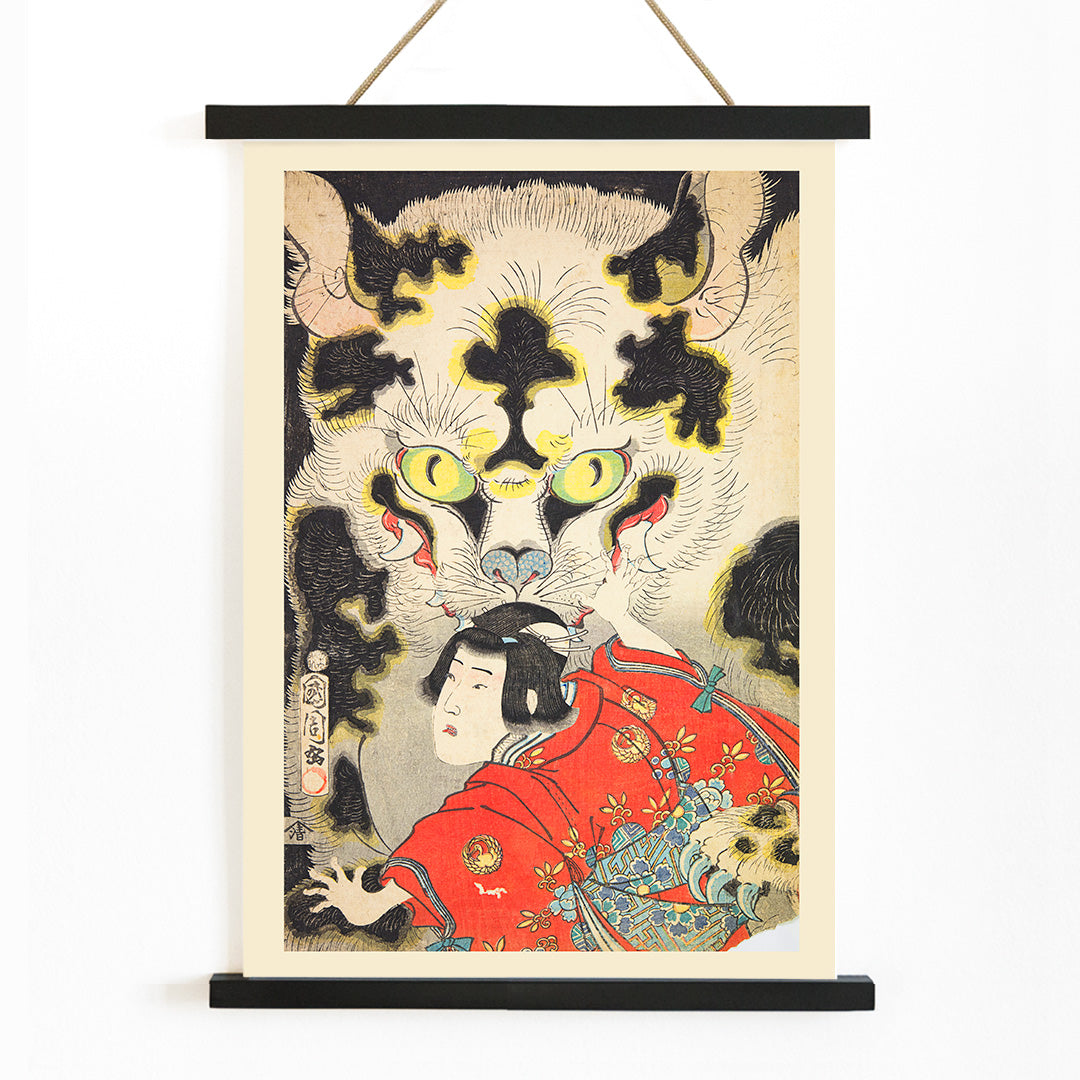
Cette estampe, Azuma nishikie, immortalise un instant de rencontre dramatique entre une figure posée en kimono et la tête imposante d'un tigre. Au Japon du XIXe siècle, le tigre, rare, incarnait la force et la protection, apparaissant dans l'art et le folklore comme une créature presque mythique. L'image traduit une fascination pour l'exotique et la tension entre beauté et danger, thèmes qui touchaient profondément le public de l'époque.
Comme œuvre décorative, la scène évoque un récit — courage et sang-froid face à l'inattendu — ce qui en fait un sujet captivant pour collectionneurs et amateurs de la culture visuelle japonaise.
Style et caractéristiques
La composition présente des contours noirs francs et des aplats de couleur vifs, caractéristiques de la technique nishiki-e en gravure sur bois. Le contraste entre le fond pâle et les noirs profonds des rayures du tigre et des cheveux de la figure intensifie la scène. Les motifs détaillés du kimono et les touches subtiles de rouge, jaune et bleu apportent rythme et énergie à l'ensemble.
L'ambiance générale est vive et légèrement stylisée, la tête du tigre étant rendue de manière emblématique. Cela rend l'impression particulièrement attrayante pour ceux intéressés par l'imagerie animale et les traditions graphiques du design japonais, ainsi que pour les collectionneurs de poster vintage.
Dans la décoration intérieure
Cette estampe japonaise vintage constitue un point focal saisissant pour un salon, une entrée ou un bureau, où sa clarté et son dramatisme peuvent être pleinement appréciés. Elle se marie bien avec des intérieurs minimalistes ou modernes grâce à ses lignes nettes, mais complète aussi des espaces éclectiques intégrant textiles, céramiques et pièces laquées.
Pour une présentation harmonieuse, on peut l'accompagner d'autres posters d'art classiques et d'impressions verticales, en privilégiant des cadres noirs et des accents discrets de rouge ou d'or pour reprendre la palette de l'œuvre.