


You may also like
-
Zoologischer Garten München 2 Poster
Ludwig Hohlwein · 1930 · Poster graphique de flamant en silhouette rose sur fond noir
Poster dès €9 · Encadré dès €16
Prix habituel À partir de €6,00Prix habituel -
Zoologischer Garten Poster
Julius Klinger · 1910 · Élégant poster de flamant rose avec lettrage Art Nouveau et encadrement aérien
Poster dès €9 · Encadré dès €16
Prix habituel À partir de €6,00Prix habituel -
Panthera Onca Poster
Charles Dessalines D'Orbigny · 1856 · Impression détaillée de jaguar aux rosettes prononcées et profil attentif
Poster dès €9 · Encadré dès €16
Prix habituel À partir de €6,00Prix habituel -
Miracles of the Jungle Poster
Artiste inconnu · 1921 · poster dramatique de léopard rugissant aux yeux verts perçants et à la tension de la jungle
Poster dès €9 · Encadré dès €16
Prix habituel À partir de €6,00Prix habituel


-

'Très beaux posters. La qualité est incroyable et nous les avons reçus très vite !'
-

'Une boutique incontournable. Un choix énorme de posters. On y a passé plus d'une heure !'
-

'Parfait pour trouver un cadeau. Les prix sont très corrects. Et ils peuvent l'encadrer et l'emballer sur place'
À propos de l'artiste
Ludwig Hohlwein fut une figure pionnière du design d'affiches allemand du début du XXe siècle, renommé pour avoir élevé la publicité commerciale au rang d'art graphique moderne. Basé à Munich, Hohlwein développa un langage visuel distinctif caractérisé par des formes audacieuses et des contrastes frappants, qui influença l'Europe entière. Ses affiches sont aujourd'hui appréciées à la fois comme jalons de l'histoire du design et comme œuvres décoratives à l'attrait durable.
Si vous souhaitez approfondir l'héritage de l'affiche européenne, explorez nos affiches d'artistes célèbres et nos impressions publicitaires vintage
L'œuvre
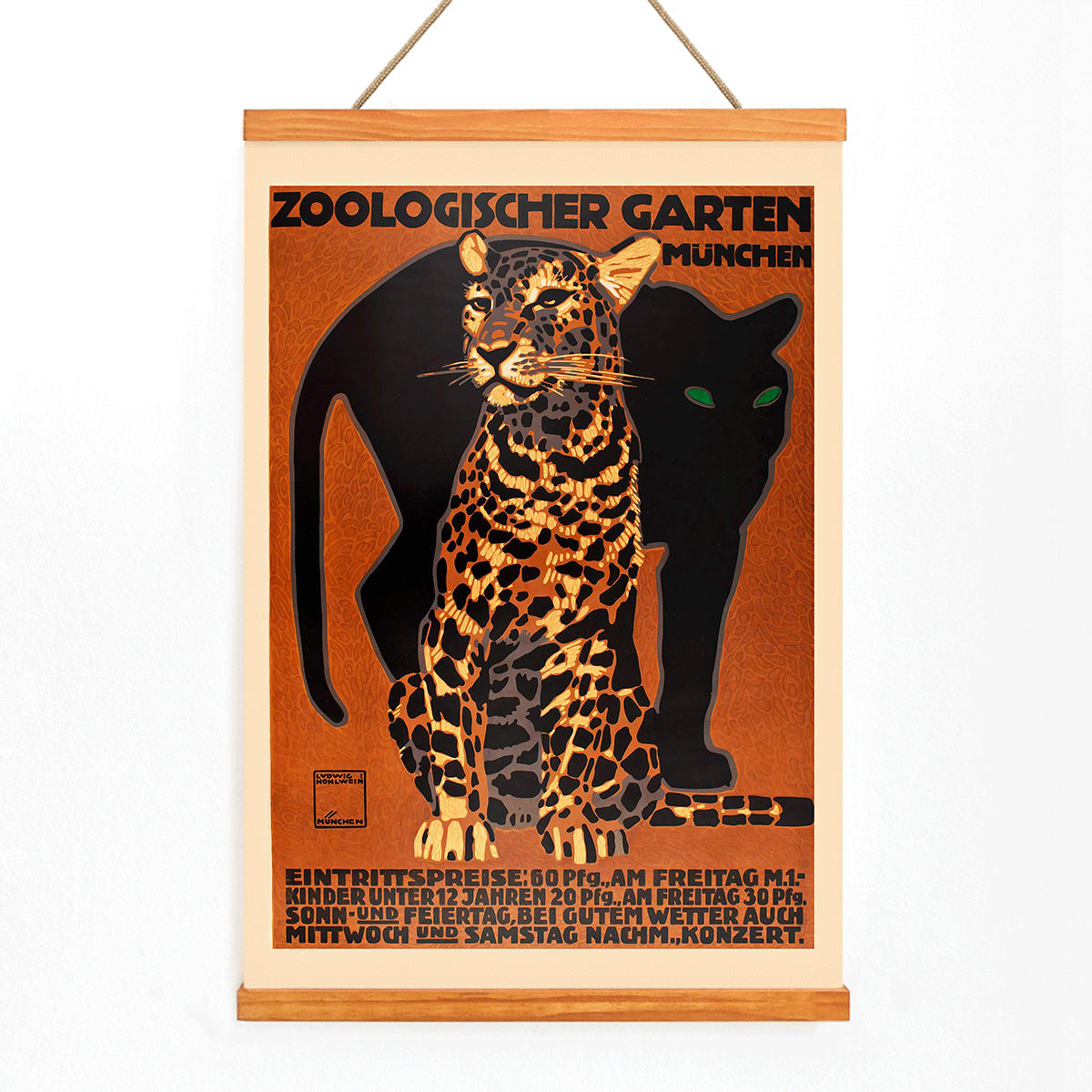
Réalisée en 1912, cette affiche fut commandée pour promouvoir le Jardin zoologique de Munich à une époque où les zoos citadins symbolisaient le progrès, l'éducation et la fierté civique. Ces affiches faisaient office d'invitations publiques, encourageant familles et visiteurs à découvrir des espèces exotiques — une perspective enthousiasmante alors que les voyages internationaux restaient rares. Le dessin de Hohlwein condense l'esprit du zoo en un emblème mémorable, reflétant à la fois les ambitions de l'institution et le rôle croissant du graphisme dans la culture urbaine.
Cette œuvre marque également une période où l'affiche devint un outil essentiel pour communiquer les loisirs modernes et les divertissements dans les villes européennes en pleine effervescence.
Style et caractéristiques
Cette affiche vintage présente un grand félin rayé imposant, probablement un tigre, rendu dans le style signature de Hohlwein par des formes simplifiées et un contraste dramatique. La composition est dominée par un orange chaud et un noir profond, posés sur un fond beige clair, produisant un effet visuel percutant. Le traitement minimal des détails et les contours affirmés assurent une lecture puissante même à distance, tandis qu'une typographie nette et épurée ancre le visuel en bas de l'affiche.
L'ambiance générale se veut audacieuse et théâtrale, incarnant l'approche moderniste qui définit l'art de l'affiche allemand de l'époque.
Dans la décoration intérieure
En tant que décoration murale, cette affiche animalière de 1912 affirme sa présence dans un salon, un bureau, un couloir ou une bibliothèque. Sa clarté graphique s'accorde parfaitement avec des intérieurs modernes ou mid-century, ainsi qu'avec des matériaux industriels comme le bois, le cuir ou le métal. La palette orange, noir et beige complète des neutres chauds et des terres cuites, et s'harmonise avec d'autres pièces animalières de notre collection animals wall art