




-

'Très jolis posters. La qualité est incroyable et nous les avons reçus très rapidement !'
-

Une boutique à visiter absolument. Grande sélection de posters. Nous y avons passé plus d'une heure !
-

C'est l'endroit idéal pour trouver un cadeau. Les prix sont très compétitifs. De plus, le magasin peut l'encadrer et l'emballer sur place.
À propos de l'artiste
Rochester est reconnu pour sa contribution à la tradition de l'illustration botanique au tournant du XXe siècle. Des artistes comme Rochester ont joué un rôle central en documentant les espèces végétales avec une précision scientifique et une sensibilité artistique, soutenant le travail des botanistes, jardiniers et collectionneurs à une époque où les planches illustrées constituaient des références indispensables.
Les illustrateurs botaniques de cette période faisaient preuve d'un grand dévouement à l'exactitude et à la clarté, veillant à ce que chaque image serve de guide fiable pour l'identification et l'étude des plantes. L'œuvre de Rochester reflète cette autorité mesurée et cette intention savante qui caractérisaient l'édition botanique vers 1900, moment où ces impressions contribuaient autant à la connaissance horticole qu'à l'appréciation esthétique.
L'œuvre
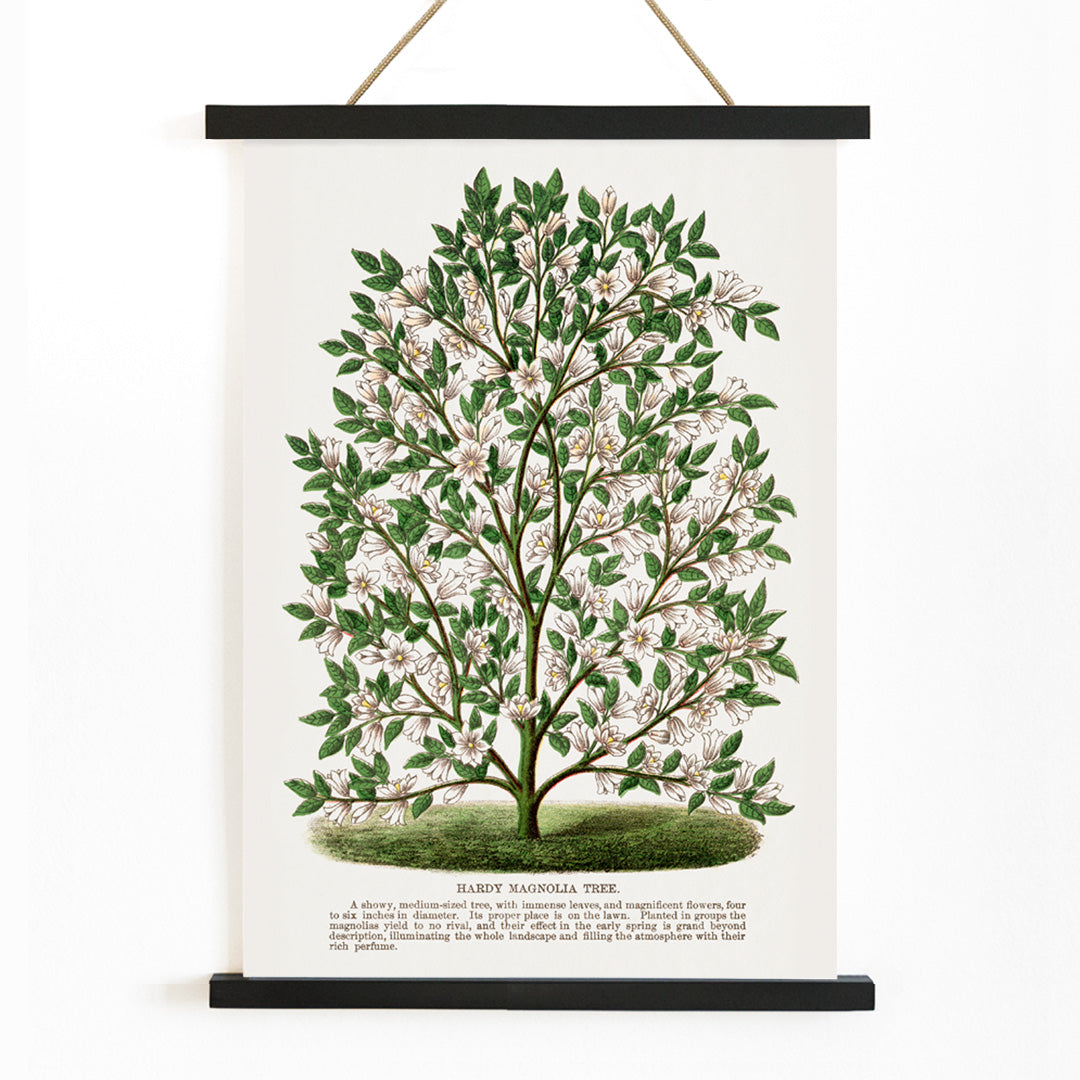
Cette planche présente le magnolia, un arbre apprécié pour sa floraison précoce et sa robustesse dans des climats variés. Vers 1900, le magnolia symbolisait le renouveau et le goût raffiné, ce qui en faisait un sujet privilégié des publications horticoles et des albums décoratifs visant à introduire la beauté des espèces cultivées dans l'intérieur domestique.
La représentation du magnolia ici illustre la fascination de l'époque pour la collecte et la classification des plantes, quand les planches illustrées servaient à la fois d'outils pédagogiques et d'objets de plaisir esthétique. Pour d'autres œuvres inspirées par la nature issues de cette période, explorez notre impressions botaniques.
Style et caractéristiques
La composition met en scène une branche unique de magnolia avec fleurs et feuilles sur un fond neutre, soulignant la forme et la structure du spécimen. Un trait fin et un ombrage subtil donnent du relief aux pétales et au feuillage, tout en préservant la netteté propre aux lithographies botaniques anciennes.
La palette se compose de verts profonds, de blancs crèmes et d'accents bruns chaleureux, créant une atmosphère sereine et fraîche. L'abondant espace négatif renforce la légèreté de l'image, la rendant particulièrement adaptée aux intérieurs à dominante claire et se mariant bien avec des pièces de notre collection tons blancs.
Dans la décoration intérieure
Cette impression botanique convient parfaitement aux chambres, couloirs, coins cuisine ou bureaux où l'on souhaite un point focal discret mais raffiné. Sa mise en page équilibrée complète aussi bien les intérieurs classiques que modernes, et elle peut servir d'élément central d'un mur de galerie ou être exposée seule comme pièce maîtresse.
Associez-la à du lin, du bois pâle ou des accents sauge pour une harmonie subtile, et envisagez un cadre fin en bois naturel pour reprendre la chaleur de la branche. Notre collection de cadres propose des options pour intégrer cette impression en toute élégance