


You may also like
-

Hammamet Poster
Paul Klee · 1914 · Radieuse impression d'art abstraite évoquant Hammamet en blocs mosaïques rouges et bleus
Poster dès €9 · Encadré dès €16
-

Image de mai Poster
Paul Klee · 1925 · Poster abstrait et ludique de blocs colorés rythmiques soulignés par fins traits noirs
Poster dès €9 · Encadré dès €16
-

Jardins du Sud Poster
Paul Klee · 1919 · Poster géométrique vibrant avec blocs rythmiques rouge bleu jaune vert
Poster dès €9 · Encadré dès €16
-

Architecture colorée Poster
Paul Klee · 1917 · Poster d'architecture ludique aux blocs vifs bleu, rose et jaune
Poster dès €9 · Encadré dès €16


-

'Très beaux posters. La qualité est incroyable et nous les avons reçus très vite !'
-

'Une boutique incontournable. Un choix énorme de posters. On y a passé plus d'une heure !'
-

'Parfait pour trouver un cadeau. Les prix sont très corrects. Et ils peuvent l'encadrer et l'emballer sur place'
À propos de l'artiste
Paul Klee était un peintre suisse-allemand et un enseignant influent dont l'œuvre a fait le lien entre l'expressionnisme, le cubisme et les premiers pas de l'abstraction. Membre du groupe Der Blaue Reiter puis figure centrale du Bauhaus, Klee a forgé un langage visuel singulier, nourri par la musique, la poésie et sa fascination pour la théorie des couleurs. Sa carrière se caractérise par une quête permanente d'expérimentations pour exprimer émotions et structures par l'art.
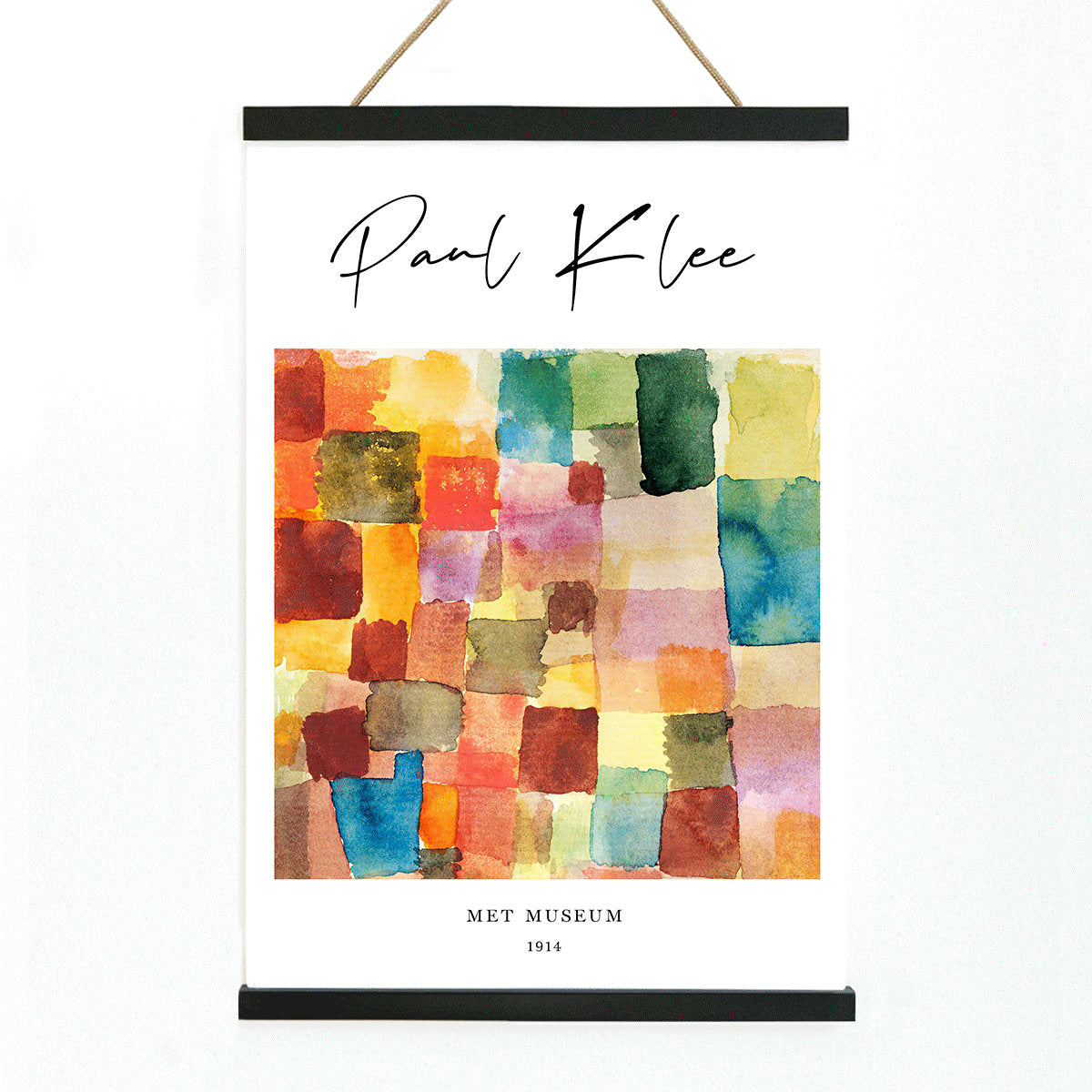
Cette œuvre de 1914 marque un tournant dans le parcours artistique de Klee, lorsque ses voyages et l'exposition à la lumière méditerranéenne l'ont poussé à faire de la couleur le sujet principal de sa pratique. Réalisée à la veille de la Première Guerre mondiale, elle reflète la recherche moderniste de nouvelles formes et de sens dans un monde en mutation. Pour découvrir d'autres œuvres de Klee, consultez notre collection Paul Klee.
L'œuvre
Patchwork de couleurs n'illustre ni scène ni objet, mais propose une méditation sur l'harmonie et le rythme par la couleur. À cette époque, Klee s'intéressait profondément à la façon dont des unités géométriques simples pouvaient évoquer des émotions complexes et suggérer un ordre intérieur. L'œuvre invite à contempler l'équilibre et l'unité, offrant une expérience visuelle détachée de la narration traditionnelle.
Conçue durant une période d'innovation artistique, la pièce illustre l'engagement de Klee envers l'abstraction et sa foi dans le pouvoir expressif de la couleur et de la forme. Pour ceux qui suivent l'évolution de l'art abstrait, voyez aussi nos impressions d'art abstrait.
Style et caractéristiques
La composition présente une grille de petits carrés et rectangles, chacun peint dans une teinte distincte. Des rouges, jaunes et oranges chaleureux dialoguent avec des bleus et verts plus froids ainsi que des bruns terreux, générant un jeu dynamique de nuances. Les contours de chaque cellule sont doux, les lavis aquarellés apportant un effet stratifié et délicat.
L'ambiance générale est à la fois vivante et contemplative, l'agencement des couleurs créant un sentiment de mouvement tout en conservant une sérénité ordonnée. La structure en patchwork et les transitions subtiles entre les teintes font de cette œuvre un exemple emblématique de l'abstraction du début du XXe siècle. Pour d'autres compositions géométriques, parcourez nos posters Bauhaus.
Dans la décoration intérieure
Cette œuvre ajoute une note raffinée de couleur aux intérieurs contemporains, s'intégrant aux salons, bureaux ou espaces créatifs. Son format modulaire s'harmonise avec le design mid-century, scandinave et contemporain, et la palette variée permet de l'associer aussi bien à des accents neutres que colorés.
Accrochée dans un cadre simple, elle peut jouer le rôle de point focal ou rejoindre une composition en galerie murale, reflétant l'esprit structuré et joueur du modernisme. Sa nature abstraite la rend adaptable à divers environnements, insufflant énergie et équilibre aux espaces