




-

"Very nice Posters. The quality is amazing and we received it very quickly !"
-

"A shop to visit absolutely. Huge selection of posters. We spent more than an hour there !"
-

"Perfect to find gift. Price are very good. An they can frame and pack it on site"
About the Artist
Dirk Jurriaan Sluyter was a nineteenth-century Dutch artist known for his skill in etching and his contribution to the graphic arts tradition of the Netherlands. During this period, artists like Sluyter used printmaking to make fine art accessible to a wider audience, allowing works of quiet introspection to enter the homes of collectors and art lovers. The Dutch appreciation for subtlety and emotional depth is evident in much of Sluyter's work, reflecting a culture that valued sincerity and personal reflection.
His prints are often associated with the understated elegance found in many classic art prints, where the focus is on genuine emotion and careful observation rather than overt drama. Sluyter's approach resonated with a nineteenth-century audience seeking authenticity and a sense of inner life in portraiture.
The Artwork
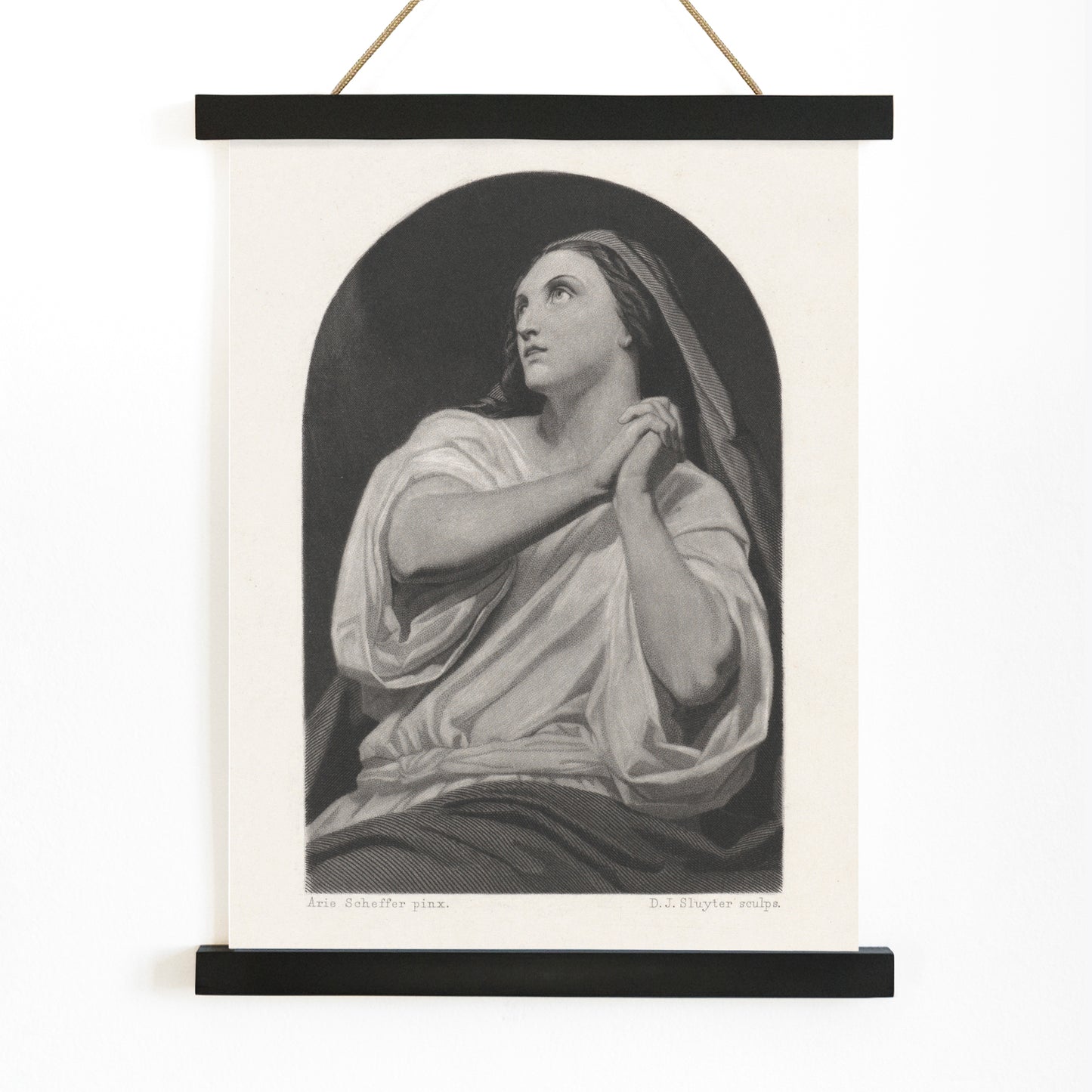
This 1843 print, depicting a woman in prayer, captures a moment of private devotion rather than public ritual. In the context of the mid-nineteenth century, such imagery offered viewers a universal symbol of reflection and steadfastness, appealing to those who valued quiet faith and personal spirituality. Artworks like this were often cherished as intimate companions, serving as daily reminders of patience and contemplation within the home.
The print aligns with a broader European trend of representing everyday spirituality, where faith was expressed through simple gestures and calm presence, rather than grand narratives. This focus on the ordinary moments of devotion made such works accessible and meaningful to a wide audience.
Style & Characteristics
Created using etching and aquatint techniques, the image features precise lines and soft tonal gradations that gently model the woman's face and headscarf. The palette is limited to black, white, and nuanced greys, lending the print a sense of depth and intimacy without distraction. The composition is close and contemplative, emphasizing the subject's upward gaze and serene expression.
The overall atmosphere is hushed and tender, with a tactile quality characteristic of fine art prints from this era. This black and white print invites viewers to appreciate subtle emotion and the quiet beauty of restrained artistry, making it a timeless piece for those drawn to understated elegance.
In Interior Design
This print is well suited for spaces that benefit from calm and introspective imagery, such as bedrooms, studies, or meditation corners. Its subdued tones and gentle presence complement minimalist, Scandinavian, or traditional interiors, blending seamlessly with neutral palettes and natural materials.
Pair it with soft off-whites, stone, or charcoal accents, or include it in a tonal gallery wall alongside other black and white wall art. Framing it simply, perhaps with options from frames, enhances its vintage character and keeps the focus on its serene devotional mood.