


You may also like
-
Komposition Poster
Otto Freundlich · 1936 · Vibrant geometric art print with interlocking color planes and bold modernist energy
Poster from €9 · Framed from €16
Regular price From €6,00Regular price -
Color Patchwork Poster
Otto Freundlich · 1936 · Vibrant abstract poster of interlocking color tiles unified by bold black outlines
Poster from €9 · Framed from €16
Regular price From €6,00Regular price -
Komposition (1939) Poster
Otto Freundlich · 1939 · Geometric abstract poster featuring earthy browns with blue and yellow accents
Poster from €9 · Framed from €16
Regular price From €6,00Regular price -
Fragments de figure Poster
Otto Freundlich · 1928 · Vibrant geometric poster of a fragmented figure with bold black outlines
Poster from €9 · Framed from €16
Regular price From €6,00Regular price


-

"Very nice Posters. The quality is amazing and we received it very quickly !"
-

"A shop to visit absolutely. Huge selection of posters. We spent more than an hour there !"
-

"Perfect to find gift. Price are very good. An they can frame and pack it on site"
About the Artist
Otto Freundlich was a German pioneer of early European abstraction, closely associated with the Paris avant-garde and the quest for a universal visual language beyond representation. He worked in painting, sculpture, and mosaic, believing that art could foster harmony and ethical ideals through simplified forms and balanced relationships.
By the late 1930s, Freundlich’s commitment to modernism placed him in direct opposition to the cultural policies of Nazi Germany, which denounced abstract art as degenerate. This historical context lends his 1937 works a particular urgency, situating them among our famous artists prints for collectors interested in art’s role during times of upheaval.
The Artwork
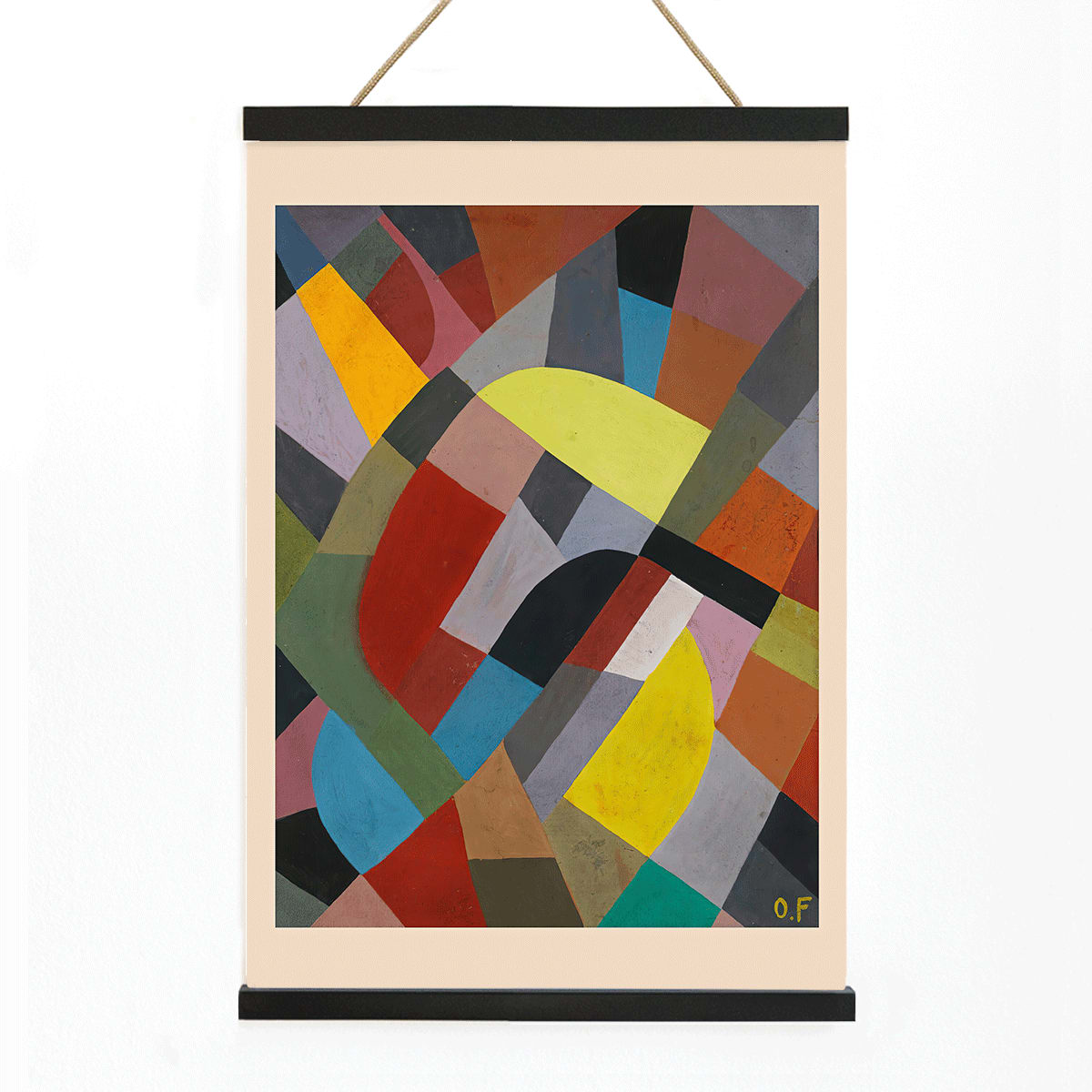
Composition Abstraite reflects Freundlich’s mature vision, where abstraction became both a formal experiment and a statement of humanistic values. Created in 1937, as Europe faced mounting tensions, the artwork embodies an ideal of coexistence—distinct elements united within a structured whole, symbolizing social harmony without erasing individuality.
In this period, non-figurative art served as a quiet act of resistance, asserting that pure form could carry messages of dignity, hope, and order. The piece stands as a testament to the enduring power of abstract art to communicate meaning beyond words, resonating with those who appreciate the historical significance of vintage abstract prints.
Style & Characteristics
The composition is constructed from interlocking geometric shapes, each filled with vivid, saturated colors—reds, yellows, blues, and greens—outlined in bold black lines. The arrangement recalls stained glass or mosaic, with flat areas of color and a rhythmic, grid-like structure that guides the viewer’s gaze across the surface.
The palette is high-contrast yet balanced, with lighter passages providing visual breathing room. The overall effect is energetic but controlled, offering a sense of movement without a single focal point. This striking abstract style makes it a compelling choice for those drawn to abstract art prints and the clarity of Bauhaus-inspired wall decor.
In Interior Design
This fine art print enhances modern living rooms, creative workspaces, or entryways where bold geometry can set a sophisticated tone. It pairs beautifully with mid-century furniture, clean shelving, and minimalist design elements.
For best effect, display it against white, beige, or soft grey walls, and echo one of its accent colors in accessories like cushions or rugs. A simple black or natural-wood frame from our frames collection complements the artwork’s graphic outlines and maintains a cohesive look.