


You may also like
-

Carnations Poster
Georg Dionysius Ehret · 1730 · Refined carnation botanical print with ruffled petals and slender stems on cream
Poster from €9 · Framed from €16
-

Whorled Solomon Poster
Pierre-Joseph Redouté · 1805 · Elegant whorled Solomon seal botanical print with arching stem and crisp leaf whorls
Poster from €9 · Framed from €16
-

Martime pine Poster
Charles Dessalines d Orbigny · 1855 · Detailed botanical print of maritime pine with clustered needles and cone studies
Poster from €9 · Framed from €16
-

Blue stars Poster
Pierre-Joseph Redouté · 1805 · Delicate blue starflower botanical print with slender leaves on a clean white ground
Poster from €9 · Framed from €16


-

"Very nice Posters. The quality is amazing and we received it very quickly !"
-

"A shop to visit absolutely. Huge selection of posters. We spent more than an hour there !"
-

"Perfect to find gift. Price are very good. An they can frame and pack it on site"
About the Artist
Georg Dionysius Ehret was one of the leading botanical illustrators of the eighteenth century, celebrated for images that balance scientific clarity with refined decorative appeal. Working during the Enlightenment, he helped shape how plants were recorded, compared, and circulated among collectors, gardens, and scholars.
His work sits at the meeting point of art and science, where accuracy mattered as much as elegance. Today, his plates remain sought-after as vintage botanical wall art and as reference images for the history of natural science.
The Artwork
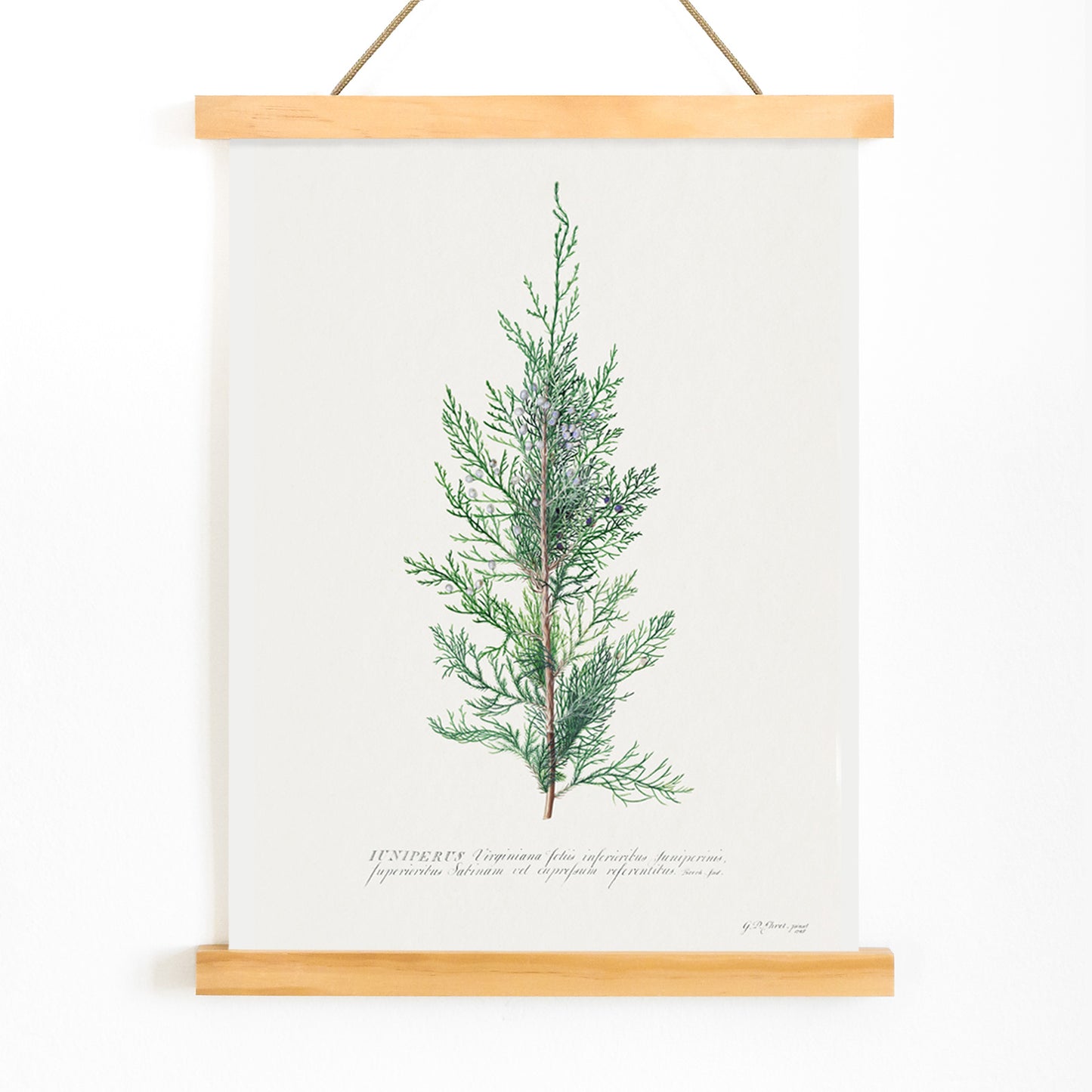
This juniper illustration reflects the Enlightenment era's fascination with cataloguing nature and the practical uses of plants. Juniper, recognized for its aromatic berries and evergreen resilience, was valued both for its medicinal properties and its symbolic associations with protection and purity across Europe.
Ehret created this plate as part of a larger effort to document and classify plant species, supporting the rapid development of botanical science. Such prints served as visual reference tools for scholars and collectors, bridging the worlds of scientific study and artistic appreciation in the early eighteenth century.
Style & Characteristics
The artwork presents a single juniper branch, isolated against a pale, uncluttered background. The composition highlights the slender, needle-like leaves and distinctive round berries, rendered with precise linework and subtle gradations of green. Soft brown tones accent the stem, while gentle shading lends the print a sense of depth and clarity.
The restrained palette and luminous finish evoke a calm, scholarly mood typical of classic botanical illustration. The image’s simplicity and attention to detail make it both scientifically informative and visually timeless, suitable for a range of interior styles.
In Interior Design
This vintage botanical print brings a sense of freshness and focus to spaces such as studies, kitchens, or bedrooms. It pairs beautifully with natural wood frames—oak or walnut—and with textiles in linen, cream, or stone for an understated, elegant look.
For a harmonious display, combine it with other botanical prints or incorporate it into a scientific illustration gallery wall. The gentle greens also complement interiors that feature green tones, from sage accents to deep olive hues.