


You may also like
-
Parrots II Poster
Institut of Leipzig · 2012 · Lush parrot print featuring three macaws perched on tropical branches
Poster from €9 · Framed from €16
Regular price From €6,00Regular price -
Parrots I Poster
Institut of Leipzig · 1972 · Vibrant parrot print arranged like a natural history plate with crisp scientific detail
Poster from €9 · Framed from €16
Regular price From €6,00Regular price -
Exotic butterflies Pl.093 Poster
Otto Staudinger · 1888 · Detailed butterfly print featuring jewel toned wings arranged like a collectors plate
Poster from €9 · Framed from €16
Regular price From €6,00Regular price -
Exotic butterflies Pl.097 Poster
Otto Staudinger · 1888 · Detailed butterfly scientific print arranged as a specimen plate on warm beige
Poster from €9 · Framed from €16
Regular price From €6,00Regular price


-

"Very nice Posters. The quality is amazing and we received it very quickly !"
-

"A shop to visit absolutely. Huge selection of posters. We spent more than an hour there !"
-

"Perfect to find gift. Price are very good. An they can frame and pack it on site"
About the Artist
Institut of Leipzig refers to a collective studio tradition rather than an individual artist, reflecting the educational and scientific poster production common in twentieth-century Germany. These institutes combined the expertise of illustrators, scientists, and printers to create visual aids for schools and museums, making scientific knowledge accessible and engaging for students and the public alike.
The Leipzig tradition is rooted in Central European natural history illustration, emphasizing clarity, precision, and educational value. Posters produced in this context are now appreciated as both decorative objects and artifacts of scientific communication, bridging the worlds of art and education.
The Artwork
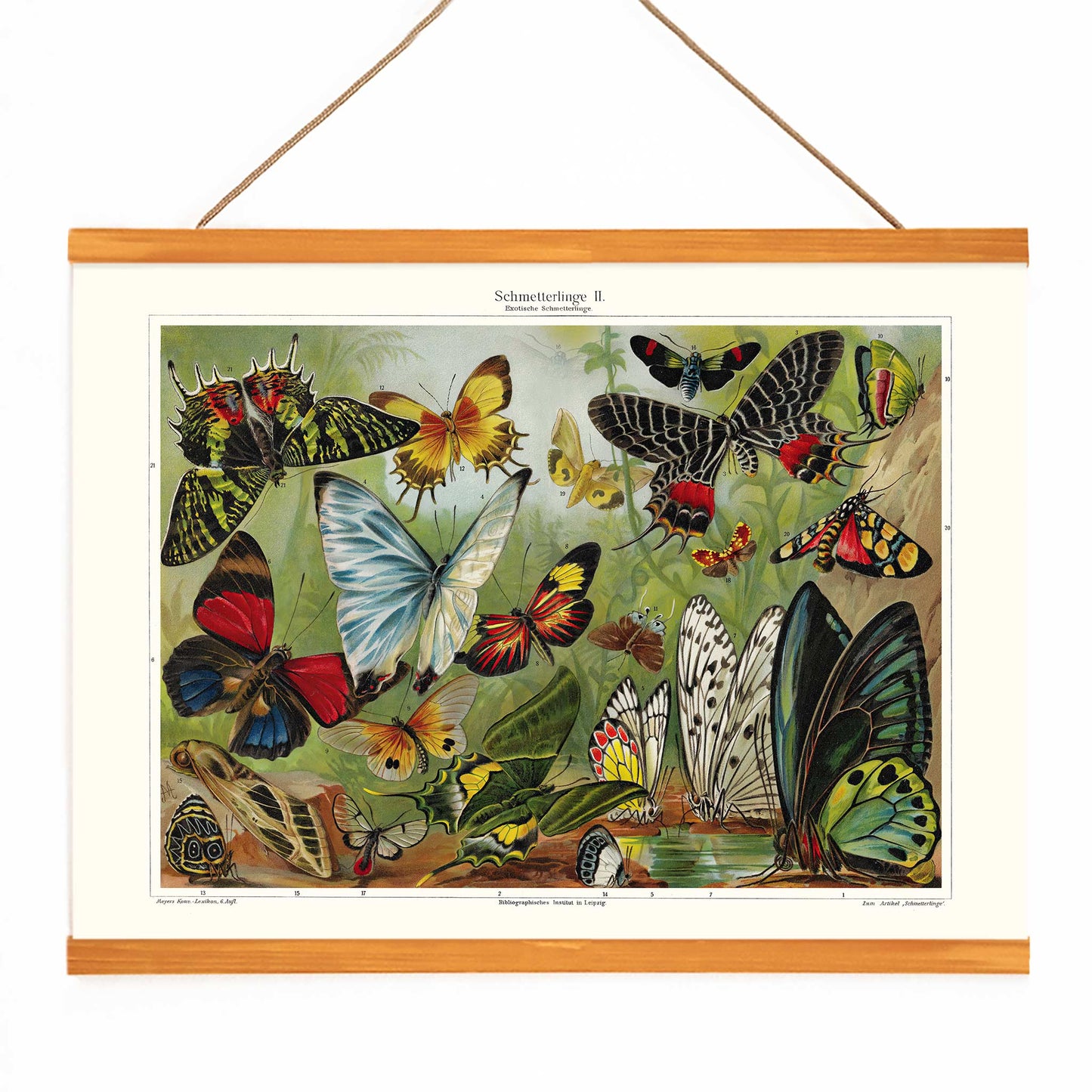
This 1971 poster, Butterflies II, was created during a time when environmental awareness and nature study were increasingly present in everyday life. Educational wall charts like this one served as essential classroom tools, helping students learn to identify and compare species. The artwork reflects a broader movement to bring the wonders of the natural world into homes and schools, fostering curiosity and respect for biodiversity.
By presenting multiple butterfly species in a single composition, the poster invites viewers to observe differences in form and coloration, echoing the scientific approach of careful observation and comparison. It stands as a testament to the era's commitment to accessible science education.
Style & Characteristics
The poster features a clean, organized arrangement of butterfly specimens, each depicted with sharp outlines and detailed wing patterns. The butterflies are spaced evenly across a light background, enhancing legibility and focus. Vivid hues—yellows, reds, blues, greens, and blacks—bring each specimen to life, while the overall composition remains orderly and uncluttered, reminiscent of a museum display.
The use of luminous color and precise draftsmanship gives the work both scientific clarity and visual appeal. This balance makes it a classic example of scientific wall art and a charming addition to animal posters, appealing to both collectors and nature enthusiasts.
In Interior Design
This butterfly poster adds a vibrant yet refined touch to interiors such as living rooms, studies, or reading nooks. Its structured layout and bright palette make it an excellent focal point, especially in spaces with neutral or soft-toned walls. The design pairs well with other educational prints, maps, or minimalist decor.
For a cohesive look, consider framing it with a slim black or natural wood frame from curated frames. Its vintage scientific style brings a sense of curiosity and order to modern interiors, making it suitable for both eclectic and classic settings.