


You may also like
-

Succulent Plant Poster
Herman Saftleven the Younger · 1655 · Refined botanical print of a sculptural succulent with softly shaded rounded leaves
Poster from €9 · Framed from €16
-

Indian fig opuntia cactus Poster
Unknown artist · 1899 · Detailed opuntia cactus botanical print with segmented green pads and a soft yellow bloom
Poster from €9 · Framed from €16
-

Cactus Opuntia Poster
Pierre-Joseph Redouté · 1816 · Elegant prickly pear cactus print with luminous yellow flower and crisp botanical detail
Poster from €9 · Framed from €16
-

Prickly Pear cactus Poster
Unknown artist · 1899 · Detailed prickly pear botanical print with yellow flowers and rounded green pads
Poster from €9 · Framed from €16


-

"Very nice Posters. The quality is amazing and we received it very quickly !"
-

"A shop to visit absolutely. Huge selection of posters. We spent more than an hour there !"
-

"Perfect to find gift. Price are very good. An they can frame and pack it on site"
About the Artist
Herman Saftleven the Younger was a Dutch Golden Age artist active in Utrecht, renowned for his precise drawings and atmospheric landscapes. Working in the mid-1600s, Saftleven was part of a vibrant culture of observation and collecting, where artists and scholars documented rare plants brought to Europe through expanding global trade.
His botanical works reflect this spirit of discovery, offering a window into the early modern fascination with cataloguing and understanding the natural world. Saftleven’s art bridges scientific inquiry and aesthetic appreciation, making his sheets valued by both botanists and art collectors.
The Artwork
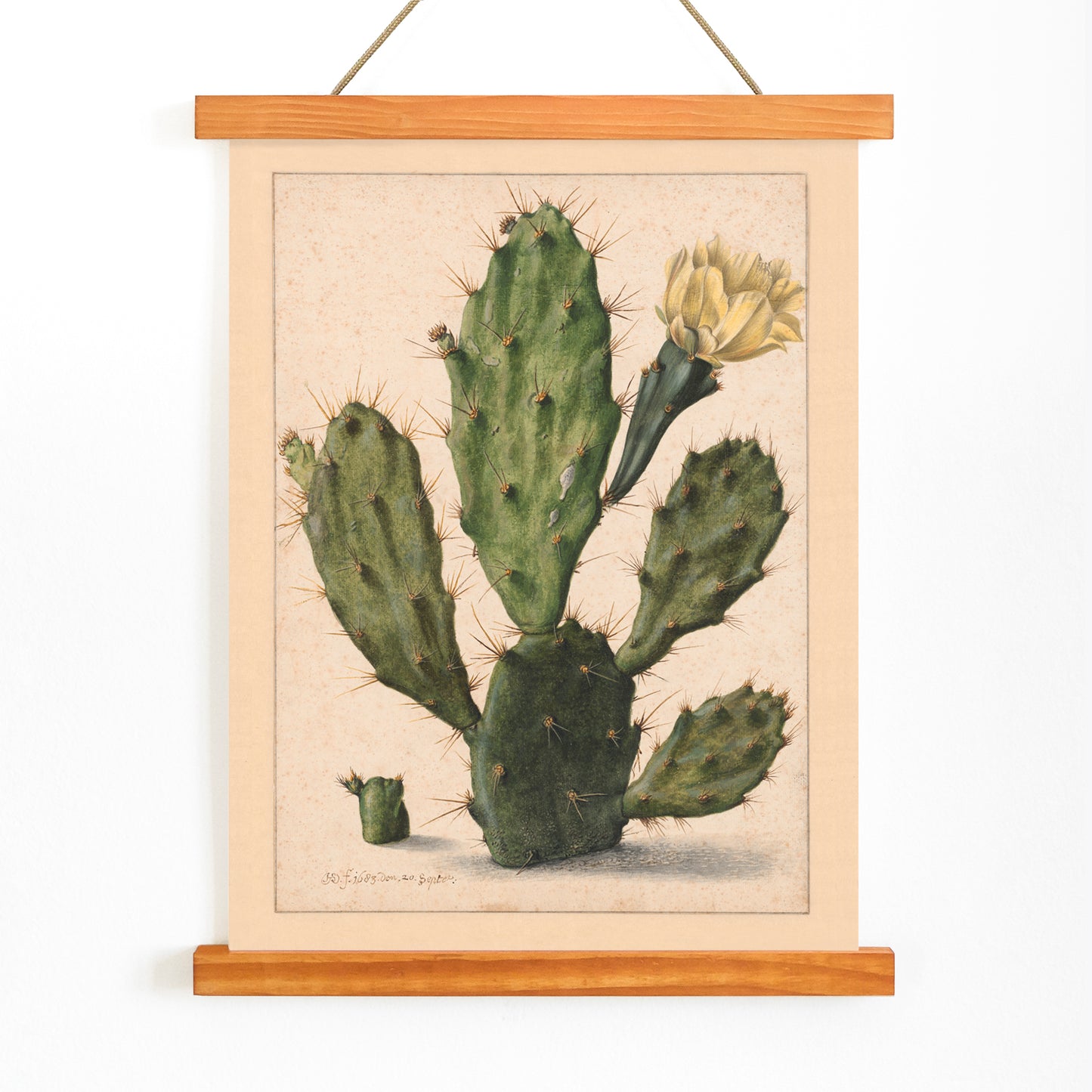
This depiction of a pear cactus in bloom was created at a time when such exotic species were newly introduced to Northern Europe. Botanical illustrations like this served as vital records for gardeners, scientists, and collectors eager to study unfamiliar plants. The artwork captures a moment of botanical curiosity, preserving the fleeting beauty of the cactus flower for future generations.
Beyond its scientific purpose, the subject also resonated with contemporary ideas about adaptation and survival, as the cactus flourishes in environments where other plants might struggle. The print embodies the era’s blend of wonder, scholarship, and the desire to bring distant nature closer to home.
Style & Characteristics
Saftleven’s rendering of the pear cactus features disciplined linework and subtle tonal shading, highlighting the segmented pads, fine spines, and delicate yellow bloom. The composition is uncluttered, focusing attention on the plant as a singular specimen against a soft, neutral background.
The color palette is composed of natural greens and gentle yellow accents, set against a warm beige paper tone that enhances the archival quality. The overall effect is calm and meditative, ideal for those who appreciate minimalist botanical art with a historic touch.
In Interior Design
This botanical print brings a sense of quiet detail to kitchens, hallways, or home offices, complementing light woods, linen, and ceramics. Its understated presence suits both modern and traditional interiors, fitting seamlessly into Scandinavian or classic design schemes.
For a cohesive look, pair it with other botanical prints or combine with green tone wall art for a natural, layered effect. It also harmonizes with classic art prints, especially when framed simply to highlight its refined lines and subtle colors.