


You may also like
-
Dogs of All Nations Poster
E. Frantz · 1936 · Detailed canine map poster presenting dog breeds worldwide in crisp black linework
Poster from €9 · Framed from €16
Regular price From €6,00Regular price -
Voyage autour du monde 112 Poster
Louis-Isidore Duperrey · 1825 · Delicate dolphin scientific print arranged as a natural history plate in blue-grey tones
Poster from €9 · Framed from €16
Regular price From €6,00Regular price -
Parrots I Poster
Institut of Leipzig · 1972 · Vibrant parrot print arranged like a natural history plate with crisp scientific detail
Poster from €9 · Framed from €16
Regular price From €6,00Regular price -
Wild animal Poster
Richard Lydekker · 1900 · Vintage print of big cats in profile with warm ochre and brown tones
Poster from €9 · Framed from €16
Regular price From €6,00Regular price


-

"Very nice Posters. The quality is amazing and we received it very quickly !"
-

"A shop to visit absolutely. Huge selection of posters. We spent more than an hour there !"
-

"Perfect to find gift. Price are very good. An they can frame and pack it on site"
About the Artist
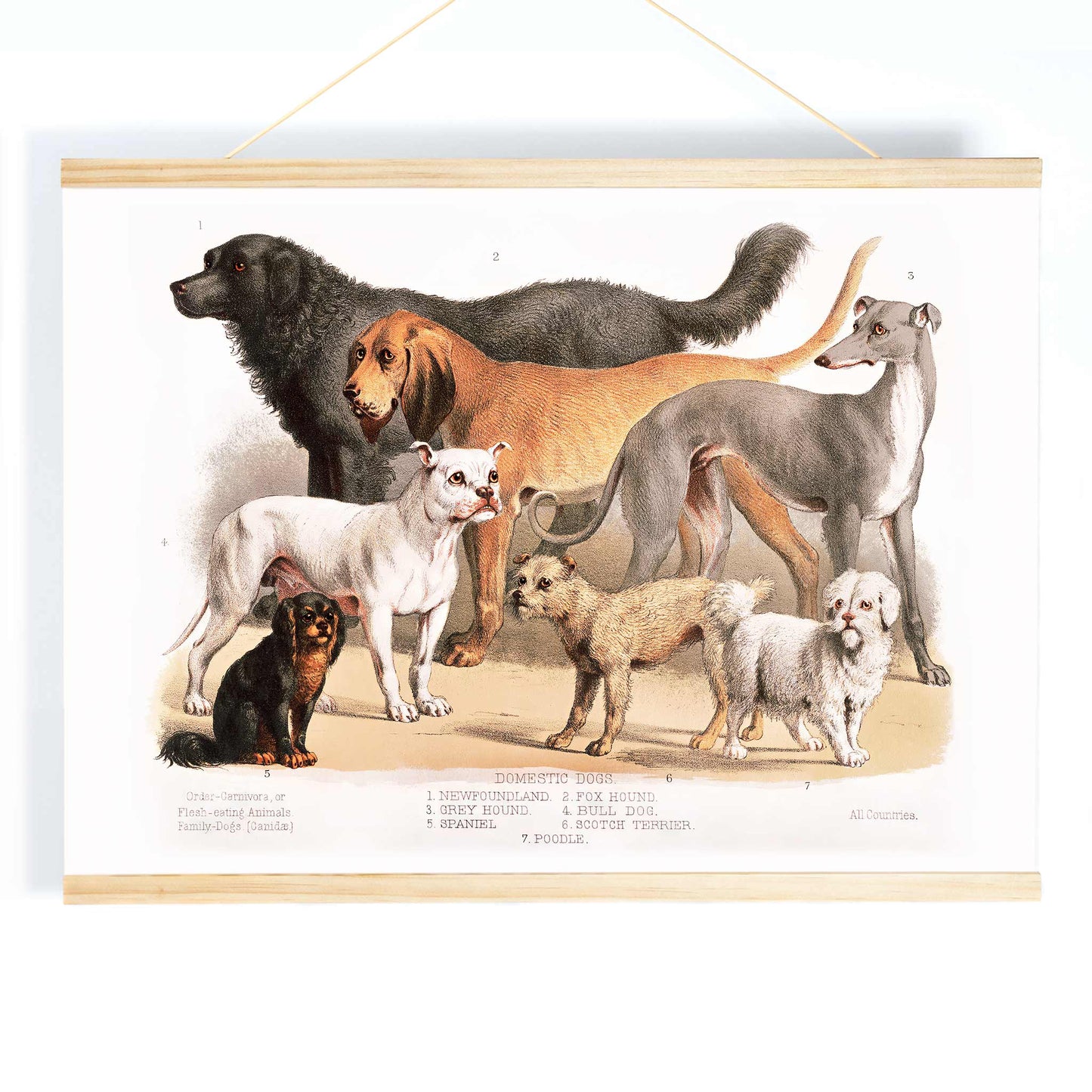
By an unknown artist, this 1874 dog plate reflects the nineteenth-century tradition of educational illustration, when engravers and draftsmen transformed careful observation into clear reference images. Such works were commonly included in natural history compendiums and popular household books, bridging scientific classification with everyday curiosity.
Rather than focusing on a single animal, the artist presents dogs as a diverse family, inviting comparison and appreciation of their variety. For admirers of animal wall art, this piece offers the charm of a period document while remaining accessible to modern sensibilities.
The Artwork
This print was created during a time when domestic dogs were increasingly categorized by breed, temperament, and purpose, reflecting the Victorian fascination with order and classification. In the 1870s, such visual catalogues appealed to readers interested in mapping and understanding the natural world, as well as improving their knowledge of everyday companions.
The artwork served as an educational tool, allowing viewers to quickly compare multiple breeds and appreciate the distinctions that defined each type. It embodies the spirit of nineteenth-century learning and the enduring presence of dogs in family life.
Style & Characteristics
The composition is arranged as a reference plate, with several dog figures spaced evenly across the page to encourage direct comparison. Delicate linework and subtle shading define each animal, focusing on silhouette and proportion rather than dramatic effects.
The palette features black, grey, and soft brown tones set against a warm beige background, creating a calm, archival atmosphere. The overall mood is studious and understated, making it a classic choice for those who appreciate vintage natural history prints and for pairing with other classic art pieces.
In Interior Design
This vintage dog print is well suited to hallways, studies, living rooms, or reading nooks, where its balanced layout and gentle tones invite closer inspection. Its timeless design complements modern, traditional, or Scandinavian interiors.
For harmonious styling, pair it with cream walls, warm wood, tobacco leather, or linen textiles, and echo the paper tone with subtle beige accents. Framed in oak, walnut, or slim black metal, it becomes refined wall decor for dog lovers and collectors of science-inspired art prints.