


You may also like
-

Lastrea Spinulosa Poster
Anna Atkins · 1850 · Fern cyanotype print with luminous white fronds on deep Prussian blue
Poster from €9 · Framed from €16
-

Lastrea dilatato Poster
Anna Atkins · 1850 · Fern cyanotype botanical print with airy fronds set against saturated blue
Poster from €9 · Framed from €16
-

Fern Poster
Anna Atkins · 1850 · Classic cyanotype fern print with crisp white fronds on deep blue
Poster from €9 · Framed from €16
-

Adiantum cuneatum Poster
Anna Atkins · 1850 · Prussian-blue cyanotype print featuring a delicate white fern with lace-like fronds
Poster from €9 · Framed from €16


-

"Very nice Posters. The quality is amazing and we received it very quickly !"
-

"A shop to visit absolutely. Huge selection of posters. We spent more than an hour there !"
-

"Perfect to find gift. Price are very good. An they can frame and pack it on site"
About the Artist
Anna Atkins was a pioneering British botanist and photographer, renowned for her groundbreaking use of the cyanotype process in botanical illustration. In the 1840s and 1850s, she produced some of the earliest photographic books, using this innovative technique to document plant specimens with scientific accuracy. Atkins’s work bridged the worlds of Victorian science and early photography, leaving a lasting legacy in both fields. To explore similar works, visit our photography prints and botanical posters collections.
The Artwork
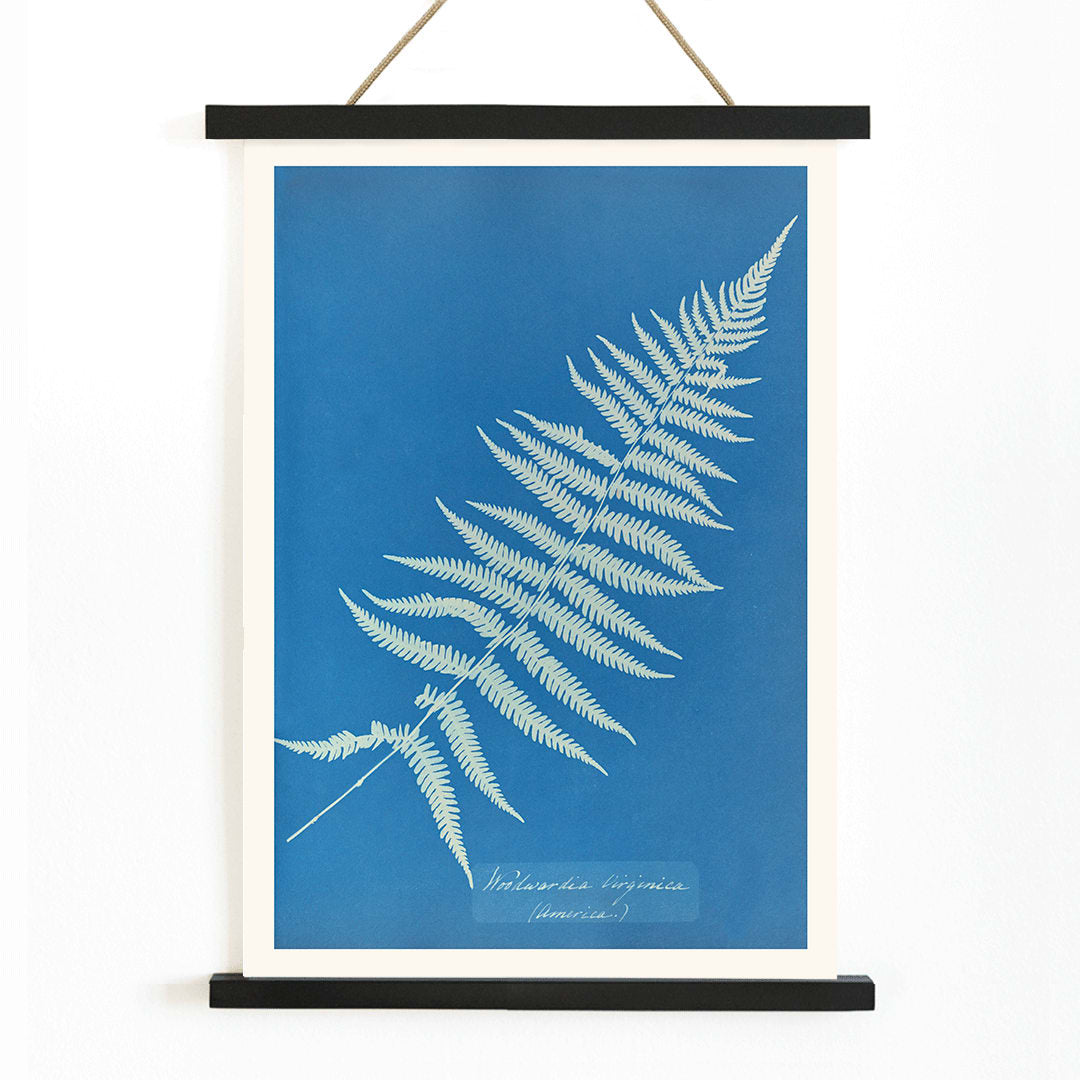
This cyanotype of Woodwardia virginica, or Virginia chain fern, was created during a time when botanical study flourished in both scientific and amateur circles. Atkins’s cyanotypes provided a new, reliable method for sharing plant forms, essential for botanists and collectors before the widespread use of color printing. The print reflects the era’s fascination with cataloguing and understanding the natural world, and it stands as a testament to the collaboration between science and art in the 19th century.
Style & Characteristics
The artwork features delicate fern fronds rendered as pale, ghostly silhouettes against a rich, deep blue background, characteristic of the cyanotype process. Each leaflet is sharply defined, showcasing the precision possible with photographic contact printing. The composition is minimalist, with generous margins and a small caption at the bottom edge, giving it an archival, portfolio-like quality. The overall mood is serene and contemplative, blending scientific clarity with an understated elegance. For more blue-toned pieces, explore our blue wall art.
In Interior Design
This vintage botanical print brings a tranquil, focused energy to interiors, making it ideal for living rooms, studies, or bedrooms. Its cool blue tones complement white or pale wood furnishings and suit both minimalist and Scandinavian-inspired spaces. The print’s historical and natural character also pairs well with traditional decor, especially when combined with linen or textured materials. As wall art, it appeals to plant enthusiasts and those who appreciate the intersection of art and science.