


You may also like
-
Bunch of blue grapes Poster
Jean Bernard Klée · 1810 · Realist grape cluster print with deep blue fruit and fresh green leaves
Poster from €9 · Framed from €16
Regular price From €6,00Regular price -
Vintage bunch of red grape Poster
Amanda Almira Newton · 1912 · Lifelike red grape botanical print with plump clustered fruit and delicate vine leaves
Poster from €9 · Framed from €16
Regular price From €6,00Regular price -
Bunch of green grapes Poster
Amanda Almira Newton · 1896 · Delicate botanical print of green grapes with translucent skins and soft shadowing
Poster from €9 · Framed from €16
Regular price From €6,00Regular price -
Olive branches Poster
L. Prang & Co · 1887 · Graceful olive branch botanical print with slender leaves and ripening fruit on white
Poster from €9 · Framed from €16
Regular price From €6,00Regular price


-

"Very nice Posters. The quality is amazing and we received it very quickly !"
-

"A shop to visit absolutely. Huge selection of posters. We spent more than an hour there !"
-

"Perfect to find gift. Price are very good. An they can frame and pack it on site"
About the Artist
Rochester Lithographing and Printing Company was a leading American commercial art studio in the late nineteenth century, renowned for its expertise in color lithography for advertising and packaging. At a time when printed images shaped public perception and consumer taste, the firm played a pivotal role in bringing refined illustration into everyday life through posters, labels, and promotional prints.
This work exemplifies the era when chromolithography bridged the worlds of commerce, art, and horticulture. As a fine art print today, it offers a glimpse into the decorative traditions that flourished when botanical illustration was both a marketing tool and a celebration of agricultural innovation.
The Artwork
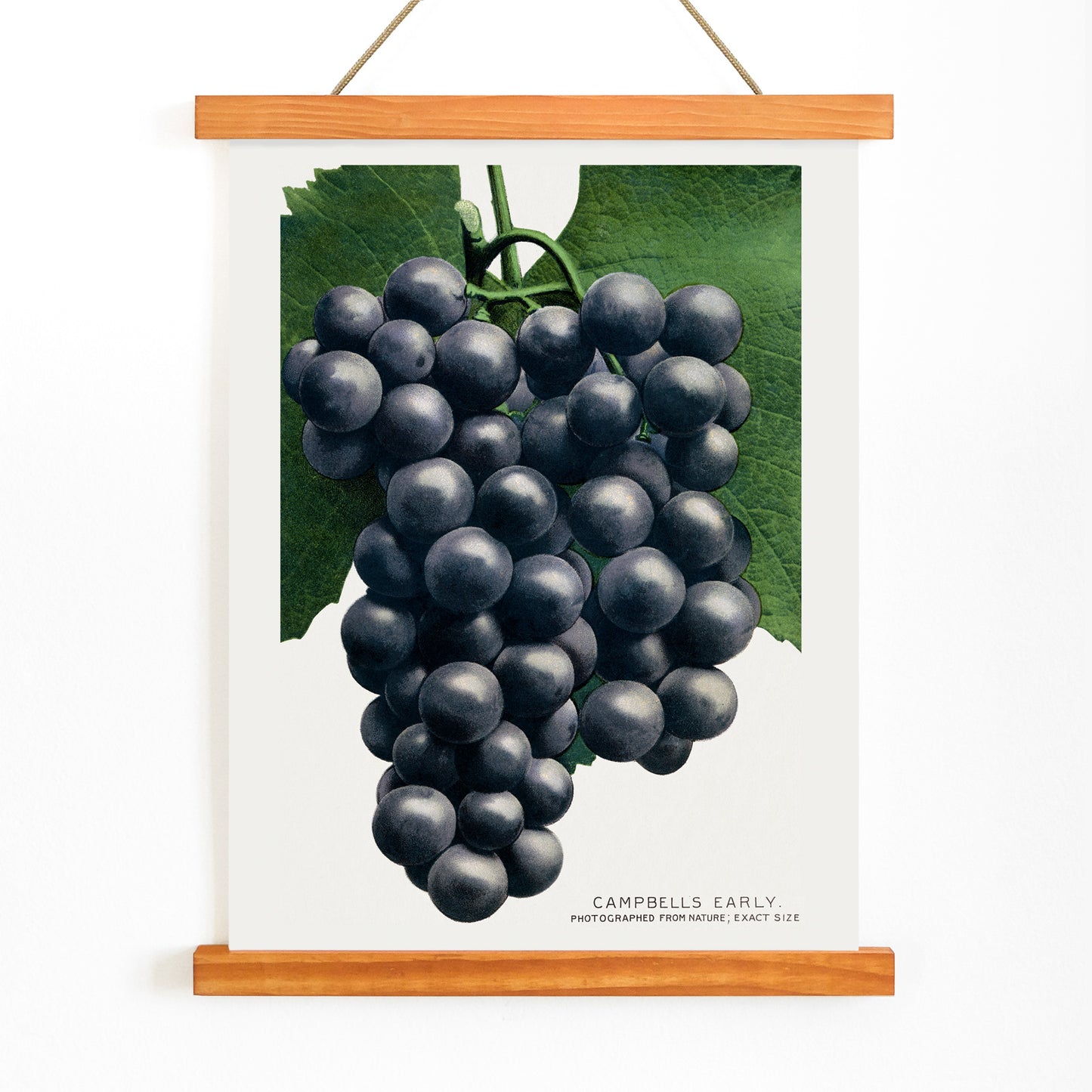
Campbells Early Grape was created during a period when fruit growers and nurseries relied on detailed imagery to distinguish and promote new cultivars in a rapidly evolving agricultural market. In the 1890s, such illustrations were essential for communicating the quality and appeal of produce to customers across the country.
This print reflects the intersection of American agricultural progress and the rise of branding through print culture. It appeals to those interested in the history of food, gardening, and the visual language of vintage advertising, and it complements selections from advertising prints.
Style & Characteristics
The composition features a realistic cluster of purple grapes surrounded by crisp green vine leaves, set against a pale, uncluttered background that highlights the fruit. The rich purples and fresh greens create a harmonious botanical palette, while subtle shading brings out the fullness and ripeness of the grapes.
Delicate contour lines and smooth color transitions evoke the precision of nineteenth-century lithography, balancing scientific detail with decorative appeal. The overall mood is abundant and serene, making this vintage print both archival in character and inviting for contemporary interiors.
In Interior Design
This botanical print is especially suited to kitchens, dining areas, or wine cellars, where its food heritage resonates. It pairs well with natural materials like wood, brass, and linen, and stands out on light-colored walls for a fresh, curated look.
For a cohesive display, combine it with other plant studies from botanical art prints or enhance its grape tones with accents from purple wall art. Framed simply, it adds understated charm to both modern and classic interiors.