


You may also like
-

Historic Ornament Poster
Elizabeth A. Nedwill · 1900 · Vivid geometric ornament vintage print balancing historic pattern with modern rhythm
Poster from €9 · Framed from €16
-

Centre Pure Colors Poster
Elizabeth A. Nedwill · 1900 · Abstract color wheel poster with overlapping rings in warm and cool hues
Poster from €9 · Framed from €16
-

Composition with Large Red Plane Poster
Pieter Cornelis Mondriaan · 1921 · Geometric abstract art print with a large red plane and crisp black grid
Poster from €9 · Framed from €16
-

Papiers découpés 3 Poster
MORYARTY · 1949 · Matisse-inspired poster with bold red leaf shapes on airy white and pink
Poster from €9 · Framed from €16


-

"Very nice Posters. The quality is amazing and we received it very quickly !"
-

"A shop to visit absolutely. Huge selection of posters. We spent more than an hour there !"
-

"Perfect to find gift. Price are very good. An they can frame and pack it on site"
About the Artist
Elizabeth A. Nedwill is credited as the creator of Carmine Wash, dated 1900. Although little is documented about her life, Nedwill's work reflects the early modernist movement's fascination with the expressive power of pure color. Her approach aligns with artists who began to explore abstraction at the turn of the century, emphasizing the emotional and perceptual impact of minimal forms.
This piece stands out as a historical bridge between late 19th-century art and the minimalist tendencies that would emerge later. Collectors value such works for their quiet innovation and their ability to resonate with contemporary tastes. For those interested in the evolution of abstraction, it pairs thoughtfully with selections from the abstract and minimalist collections.
The Artwork
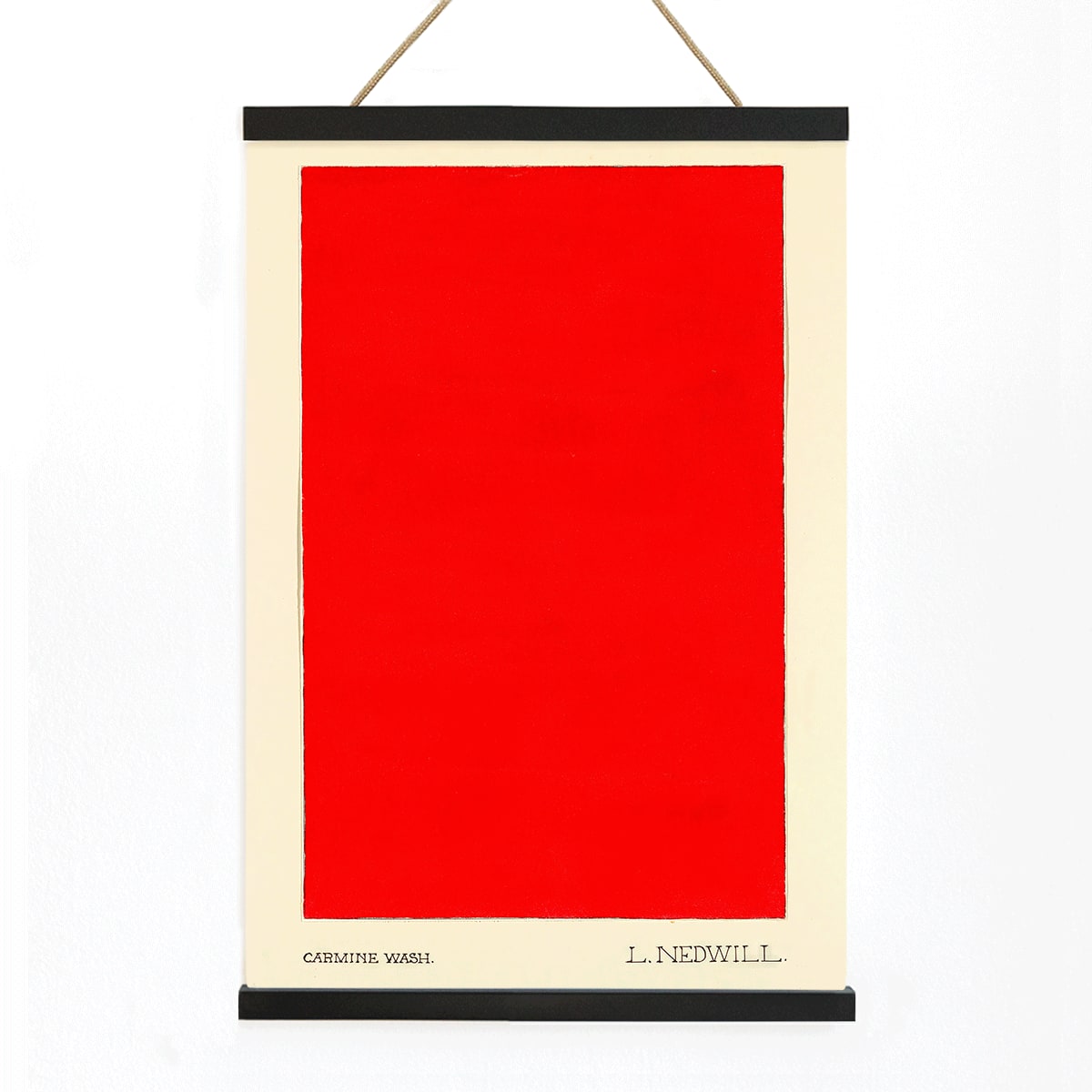
Carmine Wash was created during a period of experimentation with reduction and simplicity in art. Rather than depicting a traditional subject, Nedwill focused on the material presence of color itself. The artwork invites viewers to contemplate how a single, vivid hue can shape mood and perception, reflecting a broader cultural shift toward introspection and formal exploration in the early 1900s.
The title underscores the artist's interest in the physical qualities of pigment and wash, suggesting that color can serve as both subject and medium. This approach marked a subtle but significant move away from narrative-driven art toward a more experiential and contemplative visual language.
Style & Characteristics
The composition is strikingly minimalist: a bold carmine red rectangle occupies the center of a broad, off-white background. The edges are crisp and the negative space is generous, creating a sense of quiet balance and focus. The palette is limited to two tones, allowing the red to command attention while the ivory ground provides calm contrast.
The mood is meditative and architectural, with the artwork's simplicity lending it a timeless, modern quality. Its refined restraint makes it a natural fit for red statement pieces and other works in the minimalist tradition.
In Interior Design
This fine art print serves as a strong focal point in living rooms, entryways, studios, or offices. Its minimalist design complements Scandinavian, Japandi, and modernist interiors, while also providing structure within more eclectic spaces.
Pair it with warm neutrals, light woods, or monochrome accents to highlight the carmine hue. For a cohesive look, consider displaying it alongside ceramics or photography, and explore the frames collection for a tailored finish.