


You may also like
-
Amboine Poster
J. Tastu · 1833 · Amboine becomes a vertical poster with a sailing ship study in soft beige
Poster from €9 · Framed from €16
Regular price From €6,00Regular price -
Chinese and Javanese boat Poster
J. Tastu · 1833 · Chinese and Javanese boat scientific print in muted grey and blue
Poster from €9 · Framed from €16
Regular price From €6,00Regular price -
Voilier Poster
Claude Augé · 1908 · Labeled sailboat diagram print with crisp linework and elegant French annotations
Poster from €9 · Framed from €16
Regular price From €6,00Regular price -
Yachts on a summer cruise Poster
Charles Parsons · 1876 · Lively sailing poster featuring multiple yachts gliding across blue water under a bright sky
Poster from €9 · Framed from €16
Regular price From €6,00Regular price


-

"Very nice Posters. The quality is amazing and we received it very quickly !"
-

"A shop to visit absolutely. Huge selection of posters. We spent more than an hour there !"
-

"Perfect to find gift. Price are very good. An they can frame and pack it on site"
About the Artist
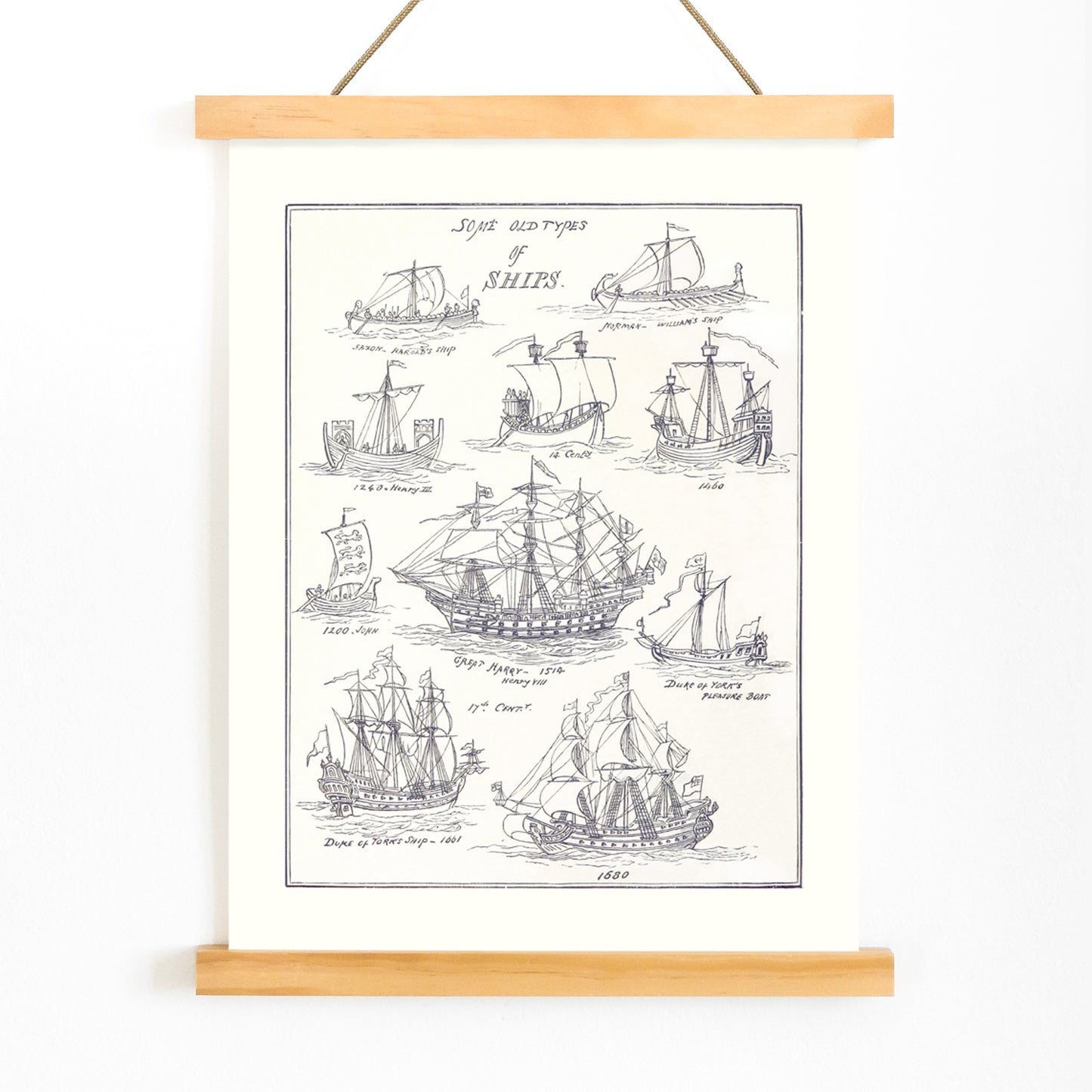
James Macaulay is credited as the creator of this 1882 maritime sheet, reflecting the late 19th century fascination with nautical life and precise observation. Although little is recorded about Macaulay’s broader biography, his work reveals a deep familiarity with ships and coastal environments, likely informed by firsthand experience. His drawings bridge the gap between artistic study and practical documentation, embodying the era’s respect for both beauty and utility in maritime art.
The Artwork
This collection of ship and coastal sketches was produced during a period when maritime trade and navigation were central to daily life and global commerce. Such sheets served as valuable references for sailors, engineers, and enthusiasts, capturing the details of vessels and seafaring scenes with clarity. The artwork stands as a testament to the importance of visual records in understanding and celebrating the working world of the sea, making it a natural fit for those interested in the history of exploration and nautical tradition. For those drawn to maritime subjects, it complements other sea and ocean wall art and enriches a collection of classic art prints.
Style & Characteristics
The composition features a series of small, precisely rendered ship studies and coastal elements arranged across a white background. Executed in fine black ink or pencil, the drawings highlight hulls, rigging, and shoreline details with swift, confident lines. The restrained monochrome palette and ample negative space lend the sheet an airy, investigative quality, inviting close inspection. The overall mood is calm and analytical, appealing to admirers of black and white posters and documentary drawing.
In Interior Design
This vintage maritime print is well suited to offices, libraries, or reading nooks where detailed line work can be appreciated. Its monochrome simplicity complements minimalist, Scandinavian, or coastal-inspired interiors, offering a subtle nod to nautical heritage. Display it with natural wood or metal frames for an understated gallery effect, or incorporate it into a curated wall alongside other classic pieces. Its quiet elegance makes it a versatile choice for both contemporary and traditional spaces.