


You may also like
-
Twee zilverreigers Poster
Theo van Hoytema · 1892 · Elegant egret print with delicate linework and dramatic black background
Poster from €9 · Framed from €16
Regular price From €6,00Regular price -
Peacock & Chickens Poster
Theo van Hoytema · 1878 · Elegant animal print featuring a vibrant peacock among calm chickens in a farmyard setting
Poster from €9 · Framed from €16
Regular price From €6,00Regular price -
Group of Egrets Poster
Ohara Koson · 1925 · Tranquil egret print in winter stillness with soft blue shadows and crisp black accents
Poster from €9 · Framed from €16
Regular price From €6,00Regular price -
Red crown crane Poster
Ogata Korin · 1687 · Elegant red crowned crane art print set against a luminous gold field
Poster from €9 · Framed from €16
Regular price From €6,00Regular price


-

"Very nice Posters. The quality is amazing and we received it very quickly !"
-

"A shop to visit absolutely. Huge selection of posters. We spent more than an hour there !"
-

"Perfect to find gift. Price are very good. An they can frame and pack it on site"
About the Artist
Theo van Hoytema was a Dutch illustrator and printmaker known for his sensitive depictions of birds, plants, and tranquil landscapes. Active at the turn of the twentieth century, he contributed to the quieter, nature-inspired side of Art Nouveau in the Netherlands, where decorative arts and book illustration were thriving.
Hoytema’s work is valued for its poetic observation of the natural world, offering a sense of calm and refinement that continues to resonate with admirers of vintage wildlife art.
The Artwork
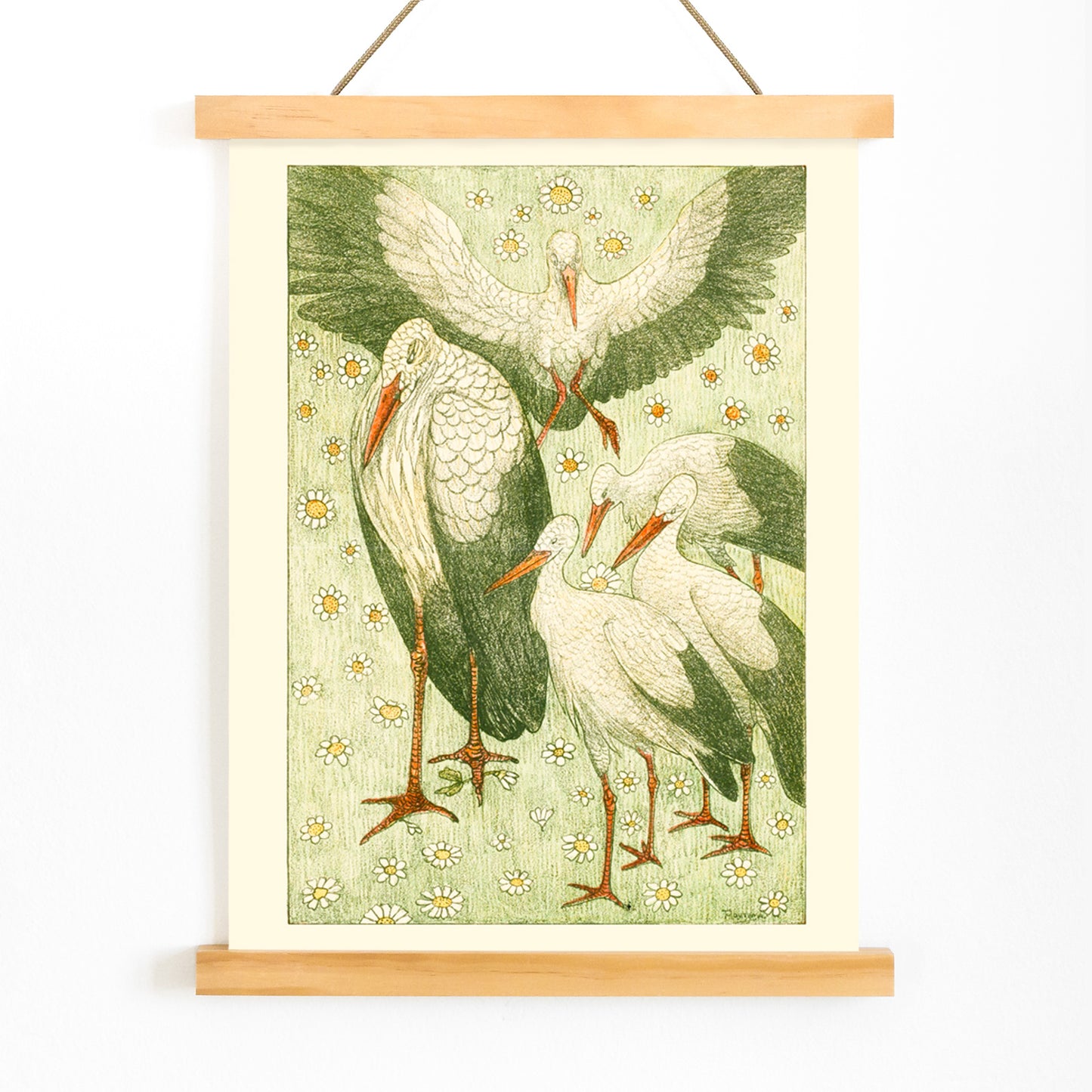
Created in 1898, this artwork captures a peaceful group of five storks standing in a meadow, reflecting the deep cultural associations storks held in northern Europe. These birds, often linked to wetlands and rural life, symbolized the cycles of migration and the harmony of countryside living. At a time when urbanization was accelerating, such images provided viewers with a comforting reminder of nature’s enduring presence.
This print embodies the era’s growing appreciation for nature-themed art, as people sought to bring the serenity of the outdoors into their homes. For more wildlife scenes, explore our animals wall art.
Style & Characteristics
The composition features five elegant storks arranged among tall grasses and wild plants, their slender forms creating a gentle vertical rhythm. The color palette is dominated by fresh greens, soft creams, and subtle touches of warm earth tones, evoking the feeling of a sunlit summer meadow.
Hoytema’s delicate linework and smooth tonal transitions lend the print a serene, contemplative mood. The overall effect is airy and understated, making it an ideal example of vintage nature art. If you appreciate botanical themes, discover our botanical prints and green tone posters.
In Interior Design
This stork print brings a sense of tranquility to living rooms, bedrooms, hallways, or studies, especially in interiors that favor a calm, natural atmosphere. Its gentle subject matter complements Scandinavian, cottage, Japandi, and classic styles, while also softening contemporary spaces with a touch of pastoral charm.
Pair it with light walls, natural woods, woven textures, and accents in sage, soft yellow, or muted terracotta for a harmonious look. It also serves as a subtle focal point within a gallery wall of landscapes and wildlife art.