


You may also like
-
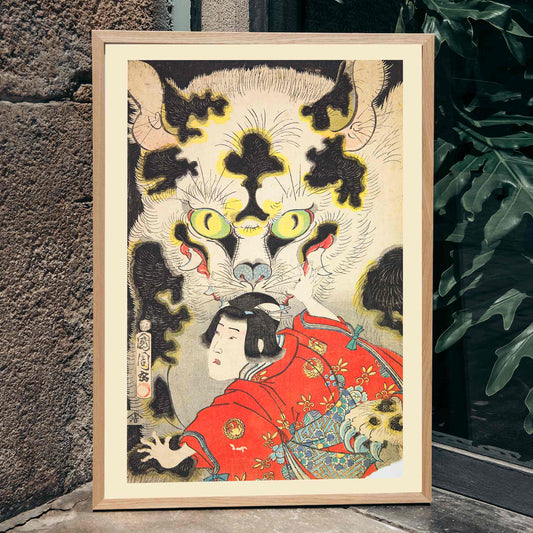
Azuma nishikie Poster
Unknown artist · 1860 · Striking ukiyo-e print of a kimono-clad figure confronting a dramatic tiger head
Poster from €9 · Framed from €16
-

The Tiger of Ryōkoku Poster
Utagawa Hirokage · 1860 · Dramatic ukiyo-e art print of a tiger seizing a rooster beneath bold calligraphy
Poster from €9 · Framed from €16
-

Black Cat 2 Poster
Unknown artist · 1750 · Minimal black cat vintage print with red seal accent on warm beige
Poster from €9 · Framed from €16
-

Tiger in the Jungle Poster
Paul Ranson · 1893 · Decorative tiger art print stalking through patterned jungle foliage in Nabi style
Poster from €9 · Framed from €16


-

"Very nice Posters. The quality is amazing and we received it very quickly !"
-

"A shop to visit absolutely. Huge selection of posters. We spent more than an hour there !"
-

"Perfect to find gift. Price are very good. An they can frame and pack it on site"
About the Artist
Created by an anonymous artist, this mid-century Japanese work reflects the enduring tradition of symbolic imagery in everyday life. In the years around 1950, Japanese artists often produced images that served both decorative and protective purposes, drawing from folklore and cultural beliefs to create art that resonated beyond the confines of museums or elite circles.
Such images were valued for their ability to communicate meaning at a glance, offering reassurance and a sense of guardianship in domestic and commercial spaces. The artist’s intent was less about storytelling and more about imbuing the environment with positive energy and protection.
The Artwork
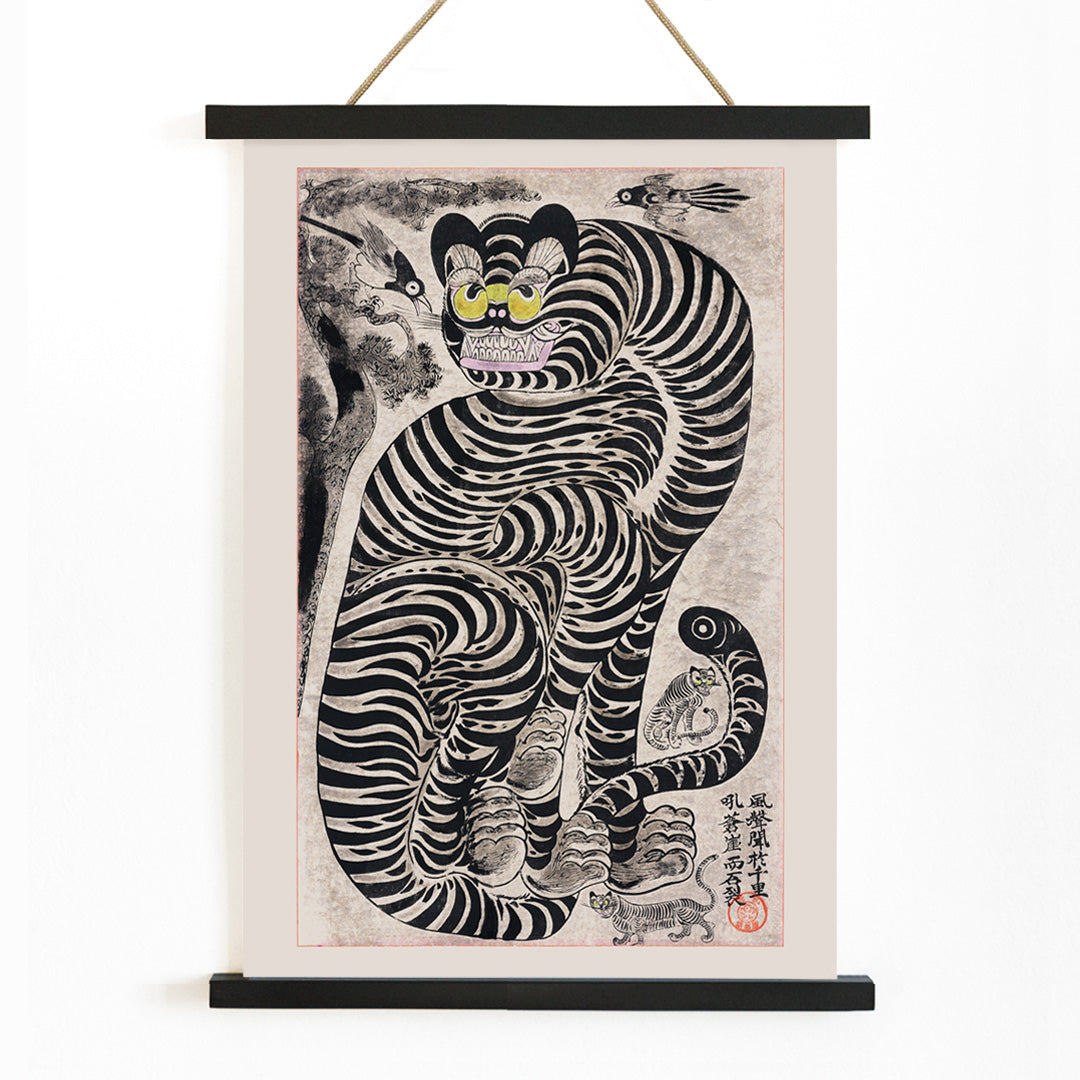
This talismanic tiger embodies the guardian role of tigers in Japanese visual culture, symbolizing courage, vigilance, and the power to ward off misfortune. Traditionally, such images were displayed in homes or shops to invite strength and safeguard inhabitants. The tiger’s presence is meant to be both a visual anchor and a spiritual protector, reflecting a longstanding belief in the power of animal symbolism.
Today, this piece appeals to admirers of Japanese and Asian wall art who seek meaningful decor with cultural resonance, as well as collectors interested in the intersection of folk tradition and graphic design.
Style & Characteristics
The artwork features a single tiger rendered in bold, calligraphic brushwork. Strong black ink lines define the tiger’s form and stripes, while the open areas of warm beige paper create a sense of space and clarity around the figure. The composition is direct and impactful, with the tiger’s alert gaze drawing the viewer’s attention.
The restrained palette of black, white, beige, and yellow enhances the graphic quality, giving the print both immediacy and subtlety. This visual approach makes it a striking addition to a gallery wall, especially when paired with black and white posters or yellow accents for contrast and warmth.
In Interior Design
This tiger print works beautifully in entryways, hallways, or home offices where a sense of protection and focus is desired. Its strong silhouette complements modern, Japandi, minimalist, and eclectic interiors, pairing well with pale woods, linen, and matte black frames.
For a warmer atmosphere, echo the beige tones with natural textiles and introduce yellow accents through ceramics or cushions. It is also a thoughtful choice for animal lovers and those exploring animal wall art for their spaces.