


You may also like
-
Neck Muscles Poster
Reijer Stolk · 1930 · Refined neck anatomy scientific print with crisp black linework on beige paper
Poster from €9 · Framed from €16
Regular price From €6,00Regular price -
Chest Muscles Poster
Reijer Stolk · 1930 · Crisp anatomical scientific print mapping chest musculature with clean black linework on beige
Poster from €9 · Framed from €16
Regular price From €6,00Regular price -
Back Muscles 2 Poster
Reijer Stolk · 1932 · Precise anatomical scientific print mapping back muscles in crisp black line on beige
Poster from €9 · Framed from €16
Regular price From €6,00Regular price -
Head of Buddha Poster
Reijer Stolk · 1943 · Serene Buddha head art print with warm golden washes and soft graphite contours
Poster from €9 · Framed from €16
Regular price From €6,00Regular price


-

"Very nice Posters. The quality is amazing and we received it very quickly !"
-

"A shop to visit absolutely. Huge selection of posters. We spent more than an hour there !"
-

"Perfect to find gift. Price are very good. An they can frame and pack it on site"
About the Artist
Reijer Stolk was a Dutch artist active during the interwar years, recognized for his mastery in drawing and printmaking. His disciplined approach to anatomy and form reflects the era’s fascination with clarity and modern graphic expression. Stolk’s work bridges the gap between artistic observation and scientific study, making his prints valued both as vintage art and as educational material.
He contributed to a tradition that merged fine art with the analytical rigor of early twentieth-century European visual culture, appealing to those who appreciate both technical skill and thoughtful composition.
The Artwork
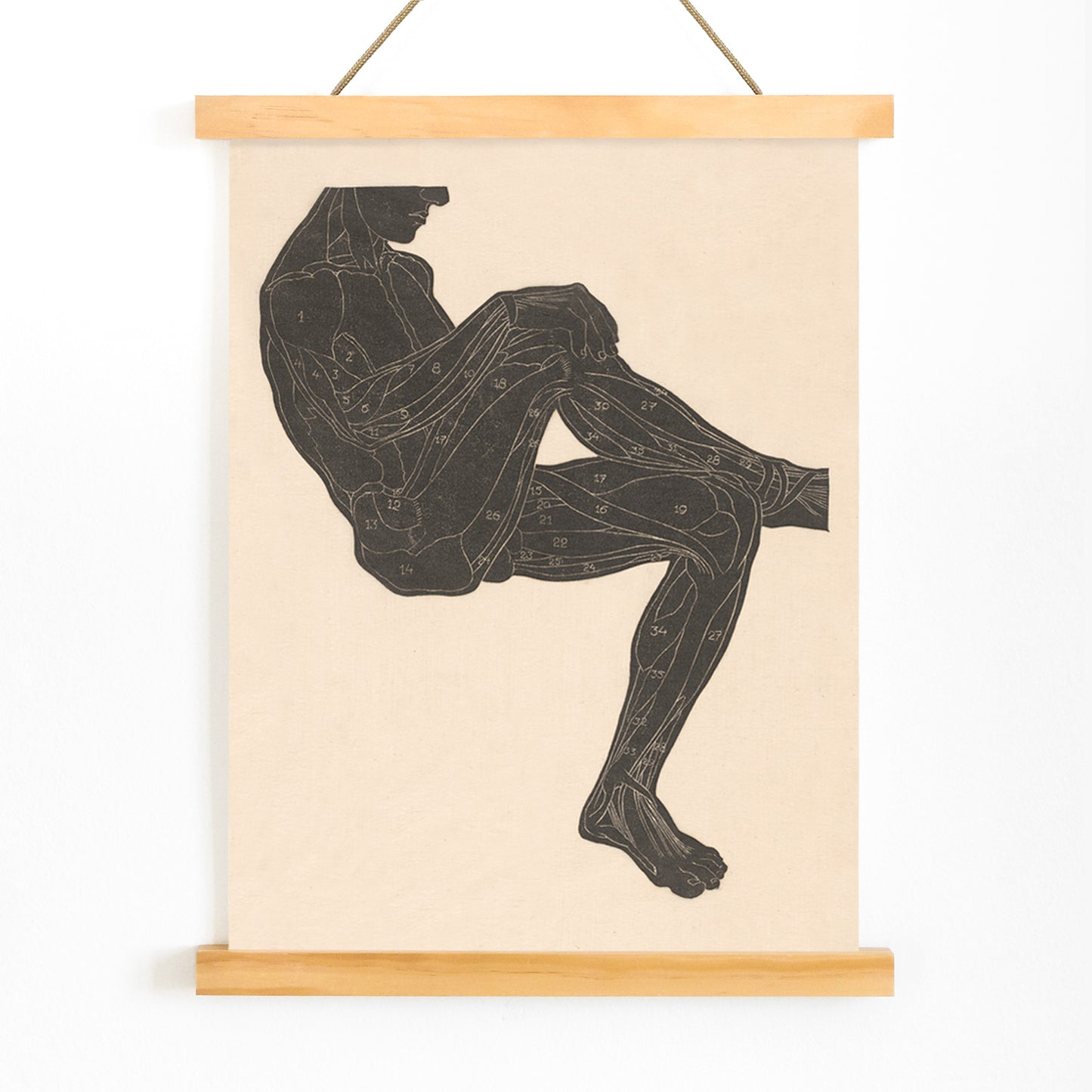
Created in 1930, Leg Muscles emerged at a time when interest in the human body’s mechanics was shared by artists, athletes, and educators alike. This anatomical study was designed to serve both as a teaching tool and as a reflection of modern ideals about strength and self-knowledge. The print stands as a testament to the period’s blend of scientific curiosity and artistic discipline, capturing a cultural moment when anatomy was celebrated for its beauty and function.
This piece remains relevant for those curating a focused science collection or seeking vintage works that highlight the intersection of art and knowledge.
Style & Characteristics
This monochrome composition depicts the musculature of the leg with precise black contours and subtle, controlled shading. The drawing maintains the clarity of a scientific diagram while preserving the expressive quality of hand-rendered lines, making it a refined addition to any black and white print display. The warm beige background softens the anatomical subject, lending the work a vintage studio feel.
Generous negative space and a focused composition create a calm, contemplative mood, balancing scientific accuracy with understated elegance.
In Interior Design
Leg Muscles is well-suited for home offices, studios, gyms, or hallways where purposeful decor is desired. Its neutral palette pairs easily with natural materials like wood, concrete, or linen, and complements minimalist or modern interiors without feeling clinical.
Displayed against cream or stone walls and framed simply, especially with options from our frames collection, it highlights the artwork’s fine print quality and intellectual character.