


You may also like
-
Lupine flowers Poster
Alida Withoos · 1695 · Delicate lupine botanical print with airy stems and soft pink blooms
Poster from €9 · Framed from €16
Regular price From €6,00Regular price -
Red Granadilla Poster
Unknown artist · 1899 · Striking passionflower botanical print with scarlet blooms, green leaves, and airy beige background
Poster from €9 · Framed from €16
Regular price From €6,00Regular price -
Red flower Poster
Margaretha de Gijselaar · 1917 · Elegant botanical print of a red flower with crisp green foliage on beige
Poster from €9 · Framed from €16
Regular price From €6,00Regular price -
Tritonia Crocata (Flame Freesia) Poster
Hendrik Cornelis Schwegman · 1892 · Vivid flame freesia botanical print with arching stems and tapered green leaves
Poster from €9 · Framed from €16
Regular price From €6,00Regular price


-

"Very nice Posters. The quality is amazing and we received it very quickly !"
-

"A shop to visit absolutely. Huge selection of posters. We spent more than an hour there !"
-

"Perfect to find gift. Price are very good. An they can frame and pack it on site"
About the Artist
Sarah Featon was a pioneering New Zealand botanical illustrator of the late 19th century, renowned for her detailed studies of native flora. Collaborating with her husband, she contributed to one of the earliest comprehensive botanical publications in New Zealand, capturing the unique plant life of the region for both scientific and artistic audiences. Her work reflects the Victorian fascination with cataloguing the natural world and sharing distant landscapes with a wider public.
Featon's illustrations played a significant role in shaping perceptions of New Zealand's botanical identity at a time when exploration and settlement were transforming both land and culture. Today, her legacy endures among collectors and enthusiasts of botanical art and historical natural history illustration.
The Artwork
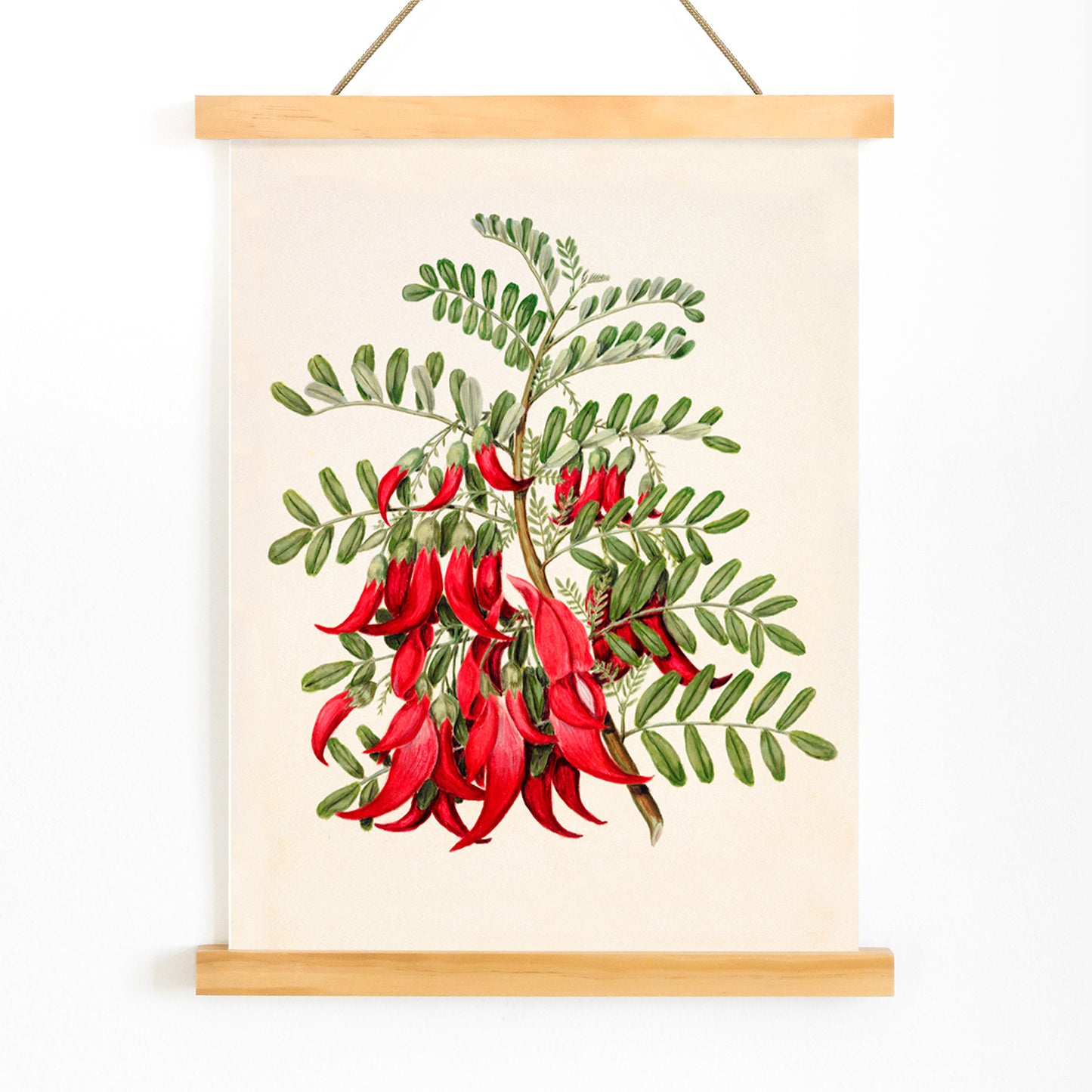
This depiction of Clianthus puniceus, commonly known as Kowhai Ngutu-kaka or the New Zealand Glory Pea, was created during a period of heightened interest in documenting regional flora. The artwork served as both a scientific reference and a symbol of national pride, reflecting the desire to record and celebrate the distinctiveness of local plant species. Such botanical plates were essential tools for education and appreciation before the widespread use of photography.
The image also carries cultural resonance, as Clianthus puniceus is recognized for its striking red flowers and its significance in New Zealand's natural heritage. Through this print, Featon contributed to a broader understanding and appreciation of the country's unique botanical landscape.
Style & Characteristics
The composition features the Clianthus plant isolated against a neutral background, allowing the vibrant red blossoms and elegant green leaves to stand out with clarity. Featon employs delicate, watercolor-like washes and precise linework to achieve both scientific accuracy and aesthetic appeal. The warm beige of the paper softens the overall effect, lending the print an archival, timeless quality.
The mood is serene and refined, with a focus on naturalistic detail and gentle color transitions. This approach makes the artwork especially appealing to admirers of red accents and collectors of botanical wall art seeking vintage-inspired decor.
In Interior Design
This botanical print offers a sophisticated focal point for living rooms, studies, or hallways, complementing interiors that value heritage and subtle color. It pairs beautifully with natural materials like wood, linen, or rattan, and suits both classic and contemporary spaces.
To enhance the artwork's impact, consider echoing its greens with indoor plants or cabinetry, or introducing red accents through textiles. The print also works well alongside other green toned art prints for a harmonious, nature-inspired interior scheme.