


You may also like
-
Cherry blossom from Bijutsu Sekai Poster
Watanabe Seitei · 1895 · Delicate cherry blossom botanical print with airy branch and refined Japanese color
Poster from €9 · Framed from €16
Regular price From €6,00Regular price -
Floral pattern from Bijutsu Sekai Poster
Watanabe Seitei · 1895 · Refined floral pattern print with white blossoms and warm orange accents
Poster from €9 · Framed from €16
Regular price From €6,00Regular price -
Pink sky Poster
Watanabe Seitei · 1895 · Airy sky-and-birds poster with soft pink haze and floating green cloud forms
Poster from €9 · Framed from €16
Regular price From €6,00Regular price -
Green Landscape Poster
Watanabe Seitei · 1900 · Tranquil Japanese landscape art print with layered green hills and spacious, calming atmosphere
Poster from €9 · Framed from €16
Regular price From €6,00Regular price


-

"Very nice Posters. The quality is amazing and we received it very quickly !"
-

"A shop to visit absolutely. Huge selection of posters. We spent more than an hour there !"
-

"Perfect to find gift. Price are very good. An they can frame and pack it on site"
About the Artist
Watanabe Seitei was a celebrated Japanese painter and designer active during the Meiji era, renowned for blending natural observation with the decorative arts. His work bridged traditional Japanese aesthetics and the modern sensibilities of an international audience, influencing both painting and design in a period of rapid cultural change.
Seitei's contributions helped shape the visual language of late nineteenth-century Japan, inspiring collectors of Japanese art prints and admirers of refined decorative art.
The Artwork
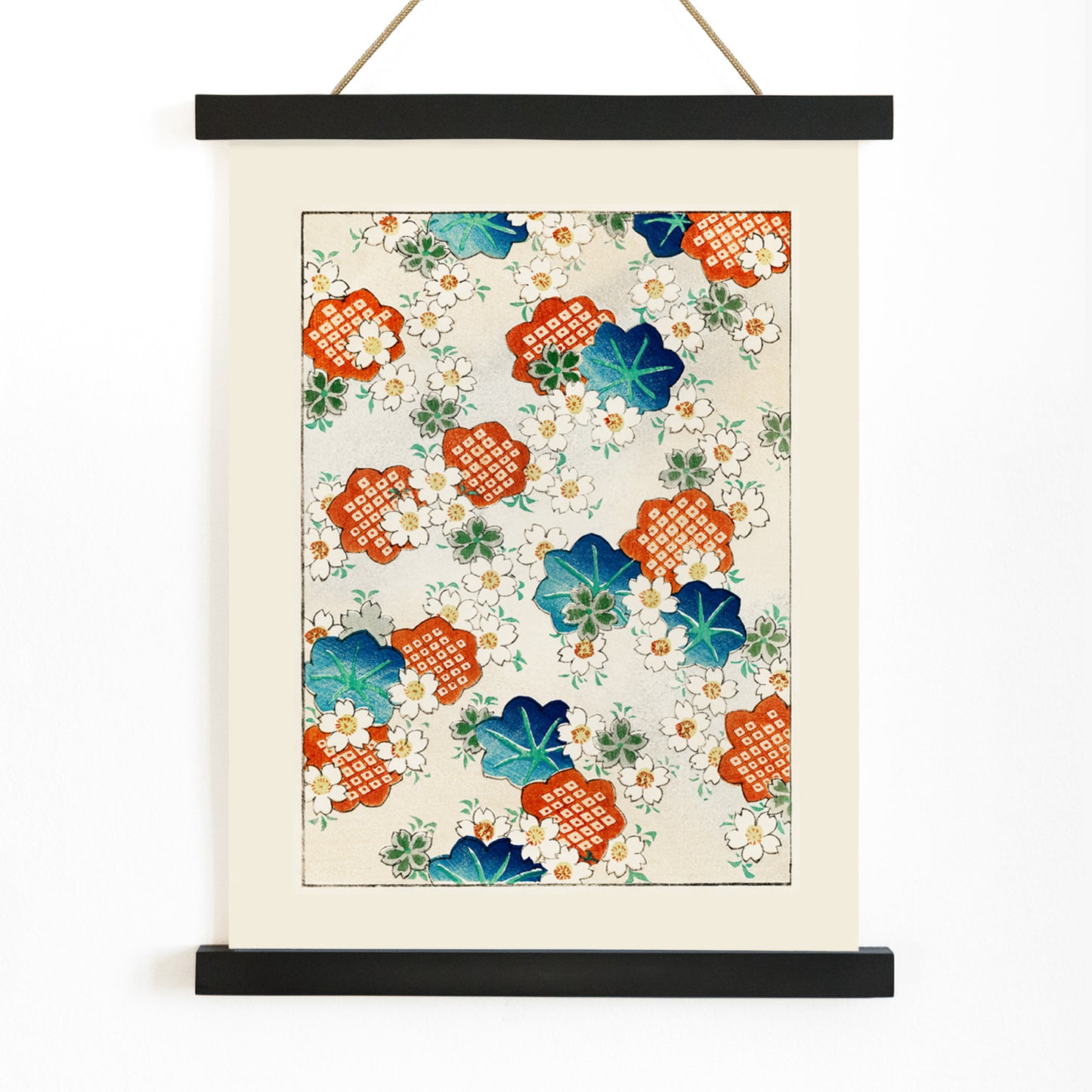
This floral pattern was created during a time when design albums and pattern studies were highly valued in Meiji Japan. Such works supported education in drawing and ornamentation, and they also fueled the growing interest in textiles and decorative objects for daily life. Rather than depicting a specific story, this print reflects the era's fascination with the rhythms of nature and the desire to bring harmony and beauty into everyday surroundings.
It offers a glimpse into how modern Japanese decorative art emerged from close observation of the natural world, serving as both inspiration and resource for artists, artisans, and designers of the period.
Style & Characteristics
The composition features a repeating arrangement of stylized blue and green flowers, accented with touches of red, all set against a light background. Confident, flowing contour lines define each floral form, while generous negative space allows the motif to breathe and creates a sense of calm.
The balanced yet lively pattern is rendered with crisp outlines and flat color areas, evoking a clean, uplifting mood. This approach aligns the work with other botanical prints while maintaining a distinctly Japanese sense of restraint and elegance.
In Interior Design
This floral art print is well suited for bedrooms, hallways, or dining spaces where a sense of calm and order is desired. Its pattern format makes it ideal for gallery walls or as a single statement piece above a console or reading nook.
Pair it with soft neutrals, pale woods, or black lacquer accents for a modern Japonisme effect, or echo the blue tones with ceramics and textiles. For a polished presentation, consider using quality frames to highlight the artwork's clean lines and airy composition.