


You may also like
-
The Chinese Limodoron Poster
Philip Reinagle · 1807 · Elegant Chinese Limodoron botanical print with slender green stems and delicate orchid blossoms
Poster from €9 · Framed from €16
Regular price From €6,00Regular price -
The Nodding Renealmia Poster
Philip Reinagle · 1807 · Dramatic renealmia botanical print with poised foliage and refined early nineteenth-century detail
Poster from €9 · Framed from €16
Regular price From €6,00Regular price -
The Queen–Plant Poster
Philip Reinagle · 1807 · Romantic botanical print featuring a vivid red Queen-Plant bloom set in a sweeping landscape
Poster from €9 · Framed from €16
Regular price From €6,00Regular price -
Sacred Egyptian Bean Poster
Philip Reinagle · 1807 · Luminous lotus botanical print with poised bloom, seedpod, and broad floating leaves
Poster from €9 · Framed from €16
Regular price From €6,00Regular price


-

"Very nice Posters. The quality is amazing and we received it very quickly !"
-

"A shop to visit absolutely. Huge selection of posters. We spent more than an hour there !"
-

"Perfect to find gift. Price are very good. An they can frame and pack it on site"
About the Artist
Philip Reinagle was a British painter and draftsman active in London during the late eighteenth and early nineteenth centuries. Known for his keen observation and technical skill, he contributed to both portraiture and natural subjects, eventually becoming a respected figure in botanical illustration. Reinagle's work was featured in major projects such as Robert John Thornton's The Temple of Flora, which aimed to elevate botanical art to the level of fine art.
His collaboration with Thornton reflected the era's fascination with scientific discovery and the beauty of cultivated plants, a sentiment that resonated with Britain's growing interest in horticulture and garden design. Reinagle's botanical plates remain admired for their blend of artistic ambition and scientific accuracy, making them enduring favorites among collectors and enthusiasts of classic art.
The Artwork
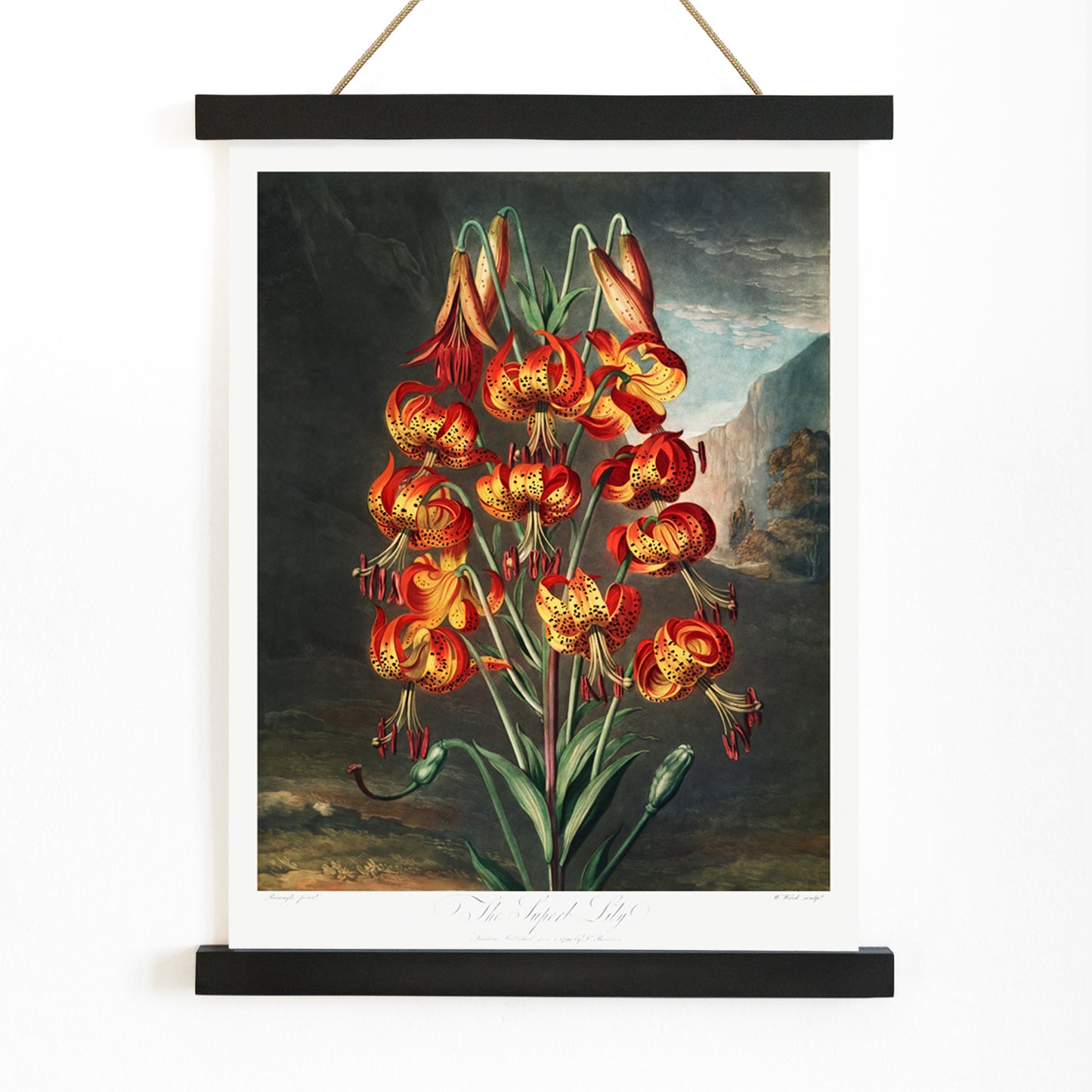
This 1807 illustration of the Superb Lily was created for The Temple of Flora, a landmark publication that sought to present flowers as noble and dramatic subjects. At the time, botanical illustration was evolving from simple identification guides into works of art that celebrated the exotic and rare. The Superb Lily, depicted here, symbolized both the allure of new plant discoveries and the prestige of cultivating such specimens in Georgian Britain.
The artwork was intended to inspire admiration for nature's diversity and the achievements of botanical exploration. It also reflects the period's enthusiasm for collecting and displaying botanical prints as a sign of taste and learning, making it a meaningful addition to collections of botanical prints and science art prints.
Style & Characteristics
The composition features a tall, elegant lily stem rising from the lower edge, crowned by a large open bloom with gracefully flared petals. The artist uses precise linework and subtle shading to give the flower a sense of volume and delicacy. The petals display a luminous palette of warm reds and yellows, contrasted with fresh green leaves and subtle touches of brown in the stem.
The background remains understated, allowing the vibrant lily to command attention. The overall effect is both dramatic and refined, with a poised, almost theatrical mood that highlights the flower's beauty. This style exemplifies the transition of botanical illustration into the realm of fine art, making it suitable for both traditional and modern interiors.
In Interior Design
This vintage botanical print brings a touch of historical elegance to living rooms, bedrooms, or studies. Its rich colors and detailed rendering make it a striking focal point, especially when paired with neutral tones, dark woods, or brass accents. The artwork can be featured alone above a console or integrated into a gallery wall with other natural history prints for a curated look.
Its timeless appeal suits a range of interior styles, from classic to eclectic, and it works particularly well in spaces that celebrate art, science, or the beauty of the natural world. The Superb Lily print offers both decorative charm and a sense of cultivated history to any setting.